
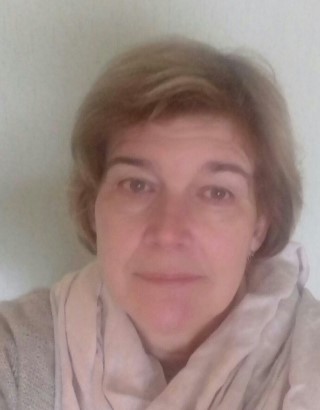
Tamāra Laimiņa
Mg. math.
Projektu administratīvā vadītāja
Tamāra Laimiņa strādā Elektronikas un datorzinātņu institūtā (EDI) kopš 1996. gada. No 2013. līdz 2025. gadam viņa bija zinātniskā asistente, bet no 2025. gada ir projektu administratīvā vadītāja.
Projekti
18 rezultāti
- Dinamiska zemes lietošanas pārraudzība (NevKlas) Noslēgts
- Kiberfizikālās sistēmas, ontoloģijas un biofotonika drošai&viedai pilsētai un sabiedrībai (VPP SOPHIS) Noslēgts
- Kiberfizikālo sistēmu tehnoloģiju attīstība un to pielietojumi medicīnā un viedā transporta jomā (KiFiS) Noslēgts
- Projekts Nr. 2 „Inovatīvas signālapstrādes tehnoloģijas viedu un efektīvu elektronisko sistēmu radīšanai” (IMIS) Noslēgts
- Ilgtermiņa valsts pētījumu programmas “Biomedicīnas un fotonikas pētniecības platforma inovatīvu produktu radīšanai (BioPhoT)” projekts “Ultraskaņas mērījumu komplekss kaulu un muskuļu raksturošanai (BoMUS-2 ) ” 01.04.2026. – 31.10.2026. Noslēgts
Publikācijas
- 2025
Evaluation of Factors-of-Interest in Muscle Phantoms Based on Ultrasonic Data(atveras jaunā logā)
Vladislavs Agarkovs, Aleksandrs Sisojevs, Aleksey M. Tatarinov and Tamāra Laimina
IFMBE Proceedings, Sēj. 131, lpp. 25 - 32, Springer Science and Business Media Deutschland GmbH
Kopsavilkums
Subcutaneous adipose tissue (SAT) and intermuscular adipose tissue (IMAT) are two forms of body fat. The differential assessment of SAT and IMAT contents in sarcopenia and obesity by ultrasonic measurements is difficult due to their complex influence. In the present study, the possibility of using pattern recognition methods applied to ultrasonic measurement data to discriminate SAT and IMAT values was investigated on muscle tissue mimicking phantoms. The muscle mimicking phantoms were made of gelatin (muscle) with oil (fat) layers (SAT) and inclusions (IMAT) with gradually varying SAT and IMAT contents from zero to 50% with a step 12.5%. The set included a net of 25 phantoms with five grades of SAT and IMAT, each varied independently. Each phantom (object under study) passed multiple repeatable ultrasound tests. For each object, a set of parameters was extracted from the set of ultrasonic signals, including speed of sound, ultrasound attenuation at two frequencies and signal amplitude integrals. Decision rules were constructed for all objects based on the set of the extracted parameters. The efficiency of the constructed rules was checked using the signals of the examination object. The results of the experiments demonstrated the potential effectiveness of the proposed approach for determining SAT and IMAT values separately. © 2025 Elsevier B.V., All rights reserved.
- 2024
Organ-On-A-Chip (OOC) Image Dataset for Machine Learning and Tissue Model Evaluation(atveras jaunā logā)
Valērija Movčana, Arnis Strods, Karīna Narbute, Fēlikss Rūmnieks, Roberts Rimša, Gatis Mozoļevskis, Maksims Ivanovs, Roberts Kadiķis, Kārlis Gustavs Zviedris, Laura Leja, Anastasija Zujeva, Tamāra Laimiņa, Arturs Abols
Data, Sēj. 9 (2), lpp. 28, MDPI
Kopsavilkums
Organ-on-a-chip (OOC) technology has emerged as a groundbreaking approach for emulating the physiological environment, revolutionizing biomedical research, drug development, and personalized medicine. OOC platforms offer more physiologically relevant microenvironments, enabling real-time monitoring of tissue, to develop functional tissue models. Imaging methods are the most common approach for daily monitoring of tissue development. Image-based machine learning serves as a valuable tool for enhancing and monitoring OOC models in real-time. This involves the classification of images generated through microscopy contributing to the refinement of model performance. This paper presents an image dataset, containing cell images generated from OOC setup with different cell types. There are 3072 images generated by an automated brightfield microscopy setup. For some images, parameters such as cell type, seeding density, time after seeding and flow rate are provided. These parameters along with predefined criteria can contribute to the evaluation of image quality and identification of potential artifacts. This dataset can be used as a basis for training machine learning classifiers for automated data analysis generated from an OOC setup providing more reliable tissue models, automated decision-making processes within the OOC framework and efficient research in the future.
Indeksēts Scopus / WoS · Scopus procentile: 75
- 2018
The Use Of The Karhunen Loeve Transformation To Form The Speech Data For Their Subsequent Wiring To Sound By Probing Sound Source By An Ultra-Wideband Pulse Locator
V. Aristov. T.Laimina
Kopsavilkums
<p>V. Aristov. T.Laimina “ The Use Of The Karhunen Loeve Transformation To Form The Speech Data For Their Subsequent Wiring To Sound By Probing Sound Source By An Ultra-Wideband Pulse Locator” , Žurnāls Austria-science, № 17/ 2018, pp.22-28.<br /> The possibility of applying the first principal component of the Karunen-Loeve transformation is developed to form the speech data for their subsequent wiring to sound when a sound source (speaking person) is probed with an ultrawideband pulse locator.</p> <p>http://austria-science.info/2018/08/10/austria-science-17-iyun-2018/</p>
- 2012
Application of the Karhunen–Loeve Transformation in Bio_Radiolocation: Breath Simulation
M. Greitans, V. Aristov, and T. Laimina
Kopsavilkums
<p>M. Greitans, V. Aristov, and T. Laimina “Application of the Karhunen–Loeve Transformation in Bio_Radiolocation: Breath Simulation”. ISSN 0146_4116, Automatic Control and Computer Sciences, 2012, Vol. 46, No. 1, pp. 18–24. © Allerton Press, Inc., 2012.<br /> Abstract</p> <p>An application of the Karhunen-Loeve transformation (principal component analysis) to the extraction of the signal corresponding to small breathing displacements of the human chest is illustrated by the example of the ultrabandwidth impulse reflected from a simple human target. The reduction in the dimensions of the original signals from 256 to 5 is shown by experiments to take place in the case of small displacements and the mean-square error not exceeding 10%</p> <p><a href="http://www.springerlink.com/content/l7178431599t3073/" target="_blank" rel="noopener noreferrer">pdf</a></p>