
Smart wind resource assessment and turbine layout optimisation technology
Value proposition
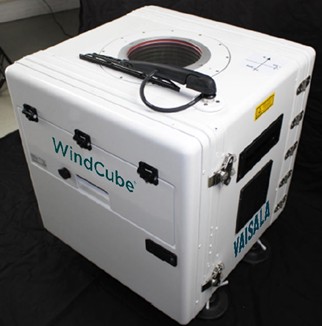
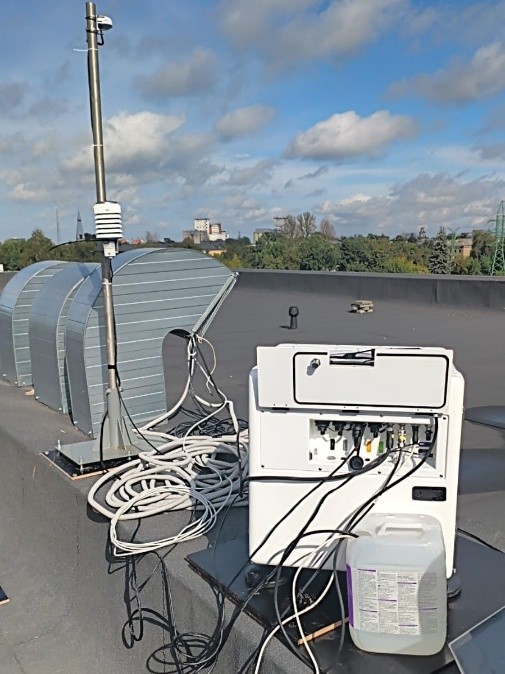
The EDI solution is a set of data acquisition, analysis and simulation services for the early and pre-investment stages of wind farm development. It combines local WindCube LiDAR wind measurements, data validation and modelling in WindPRO to give a more accurate assessment of wind resources, potential energy production, wake losses, forest and turbulence effects, and the optimal turbine layout.
What is it? A set of data acquisition, analysis and simulation solutions.
Who is it for? Wind farm developers, investors and municipalities.
Key benefits
A data-driven forecast of electricity production before any investment is made. This lowers project risk and speeds up investment decisions.
Lower energy losses thanks to optimal turbine layout. This means a lower LCOE and higher project profitability.
Business and Innovation Perspective
Challenge
Local wind data is not good enough. Public reanalysis datasets such as ERA5, MERRA-2 and NORA3 have limited spatial resolution, so they are often not detailed enough for a specific site. As a result, they may not be reliable enough for an accurate wind resource assessment at the chosen location.
Wake losses and forest effects reduce profitability. In poorly planned wind farms, turbine wake effects can cut potential electricity production by 10–15%, which directly raises the LCOE. Forests also increase surface roughness, wind shear and turbulence. This can lower turbine efficiency, increase mechanical loads and raise operating costs.
Decisions are made with incomplete information. When a wind resource assessment relies on local data that has not been properly validated, the uncertainty of the annual energy production (AEP) forecast grows. This can affect project cash flows and return on investment, and it increases financial risk.
EDI solution and uniqueness
Parameter | Result of other approaches | Result of the EDI solution |
|---|---|---|
AEP uncertainty / P90 risk | Higher uncertainty, especially when no locally validated measurements are available | Lower uncertainty, because site-specific WindCube LiDAR data and WindPRO modelling are used |
Wake loss assessment | Approximate, or based on standard assumptions about how turbines affect each other | Calculated in WindPRO, taking into account the specific turbine layout and local wind data |
Forest and turbulence effects | Often assessed in general terms, using approximate surface roughness parameters | Analysed using site-specific LiDAR data, surface roughness modelling and forest impact assessment |
Technology Readiness Level (TRL): TRL 6
Projects
This work was supported by the NextGeneration EU (Latvia’s Recovery and ResiliencePlan’s investment “Research, Development and Consolidation Grants”) under GrantMESVA: “Methods, Tools and Techniques for Smart Development of Energy system” (Nr.5.2.1.1.i.0/2/24/I/CFLA/006).
Technical specification
Operating principle
The key advantage of the solution is that it combines local WindCube LiDAR measurements with WindPRO modelling. This gives a more accurate assessment of a site's wind potential and reduces AEP uncertainty.
Technical parameters
Parameter | Value / description |
|---|---|
Technology type | Data acquisition, analysis and simulation solution for wind farm feasibility studies and optimisation |
Measuring device | WindCube vertical profiling LiDAR with a weather station |
Measurement height | Up to 300 m; wind data at up to 20 different heights |
Measured parameters | Wind speed, wind direction, vertical wind, turbulence intensity, temperature, humidity, pressure, precipitation |
Data interval | 10-minute averages; more detailed analysis of raw data is also possible |
Data transfer / storage | Remote data transfer, local data storage, data export for analysis |
Additional data sources | ERA5, MERRA-2, NORA3, terrain data, land cover and forest cover data |
Modelling environment | WindPRO 4.1 |
Modelling functions | AEP calculation, P50/P75/P90 scenarios, wake losses, forest and surface roughness effects, turbine layout optimisation |
Main outputs | Energy production forecast, loss breakdown, layout recommendations, LCOE and investment risk assessment |
Output format | PDF report, Excel tables, maps |
Type of cooperation
Contract research / Cooperation: Adapting the technology to the client's specific needs
Contact