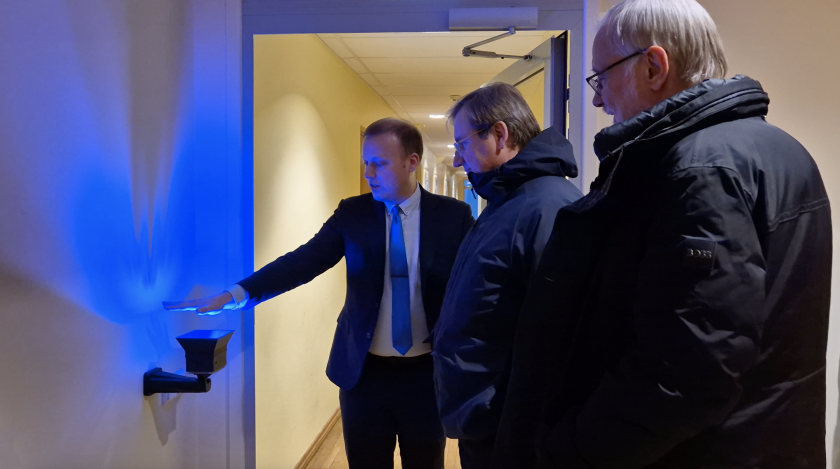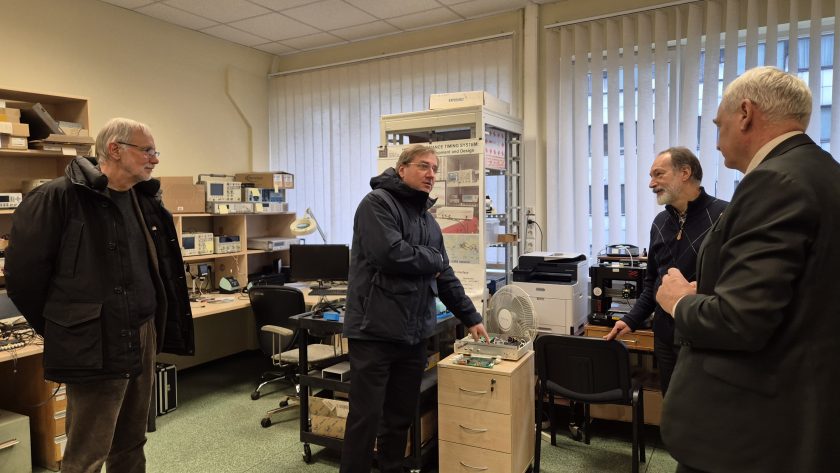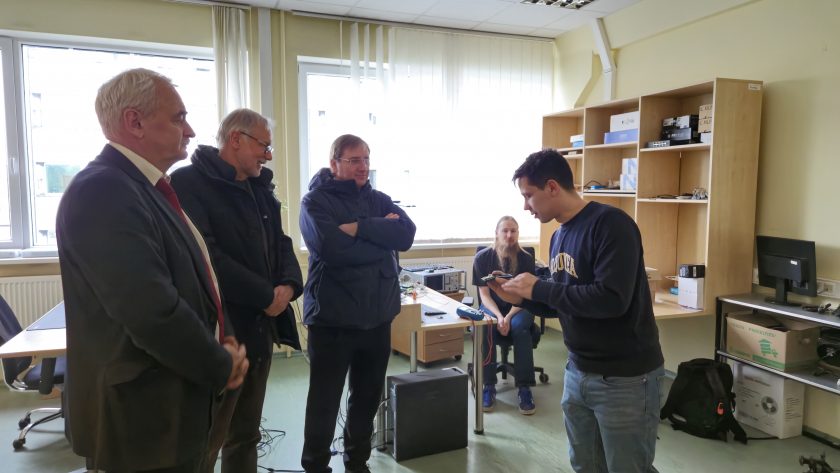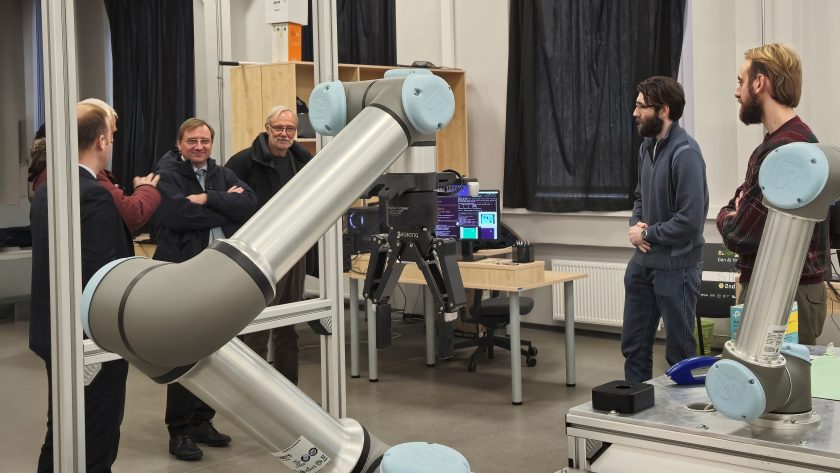
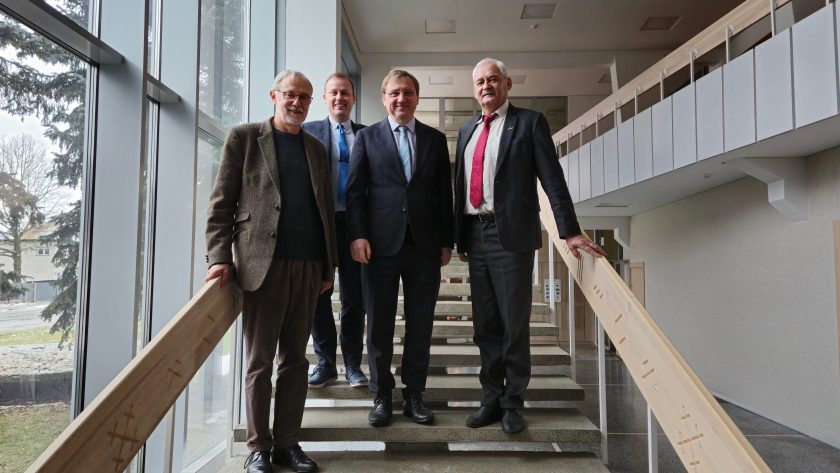
On January 8, the Director of the Institute of Electronics and Computer Science (EDI), Modris Greitāns, and Deputy Director for Development, Kaspars Ozols, hosted the leadership of the University of Latvia (UL)—rector Professor Gundars Bērziņš and UL Council chairman Professor Mārcis Auziņš. The purpose of the meeting was to present EDI’s current research directions, discuss the progress of their long-standing collaboration, and evaluate opportunities for its expansion.
During the meeting, both institutions discussed their ambitions and goals, focusing on areas where EDI and UL could complement each other to strengthen Latvia’s research and innovation potential. Several fields for expanded collaboration were identified, including food production, pharmaceuticals, chemistry, medicine, manufacturing, and information technology. Both parties agreed that advancing these sectors is crucial for achieving institutional goals and increasing the productivity and competitiveness of Latvia’s economy.
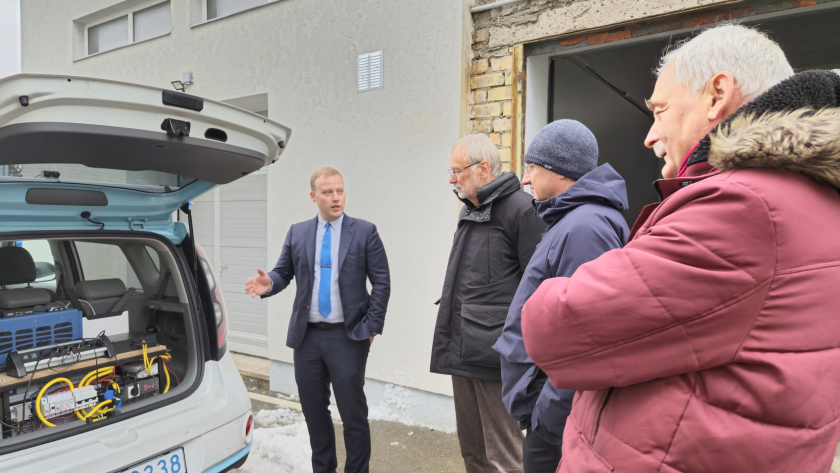
As part of the visit, UL leadership toured EDI laboratories and explored the institute’s innovative technologies and solutions, including robotics, the Internet of Things, remote sensing, biometrics, artificial intelligence, microchips, and embedded systems. Rector Professor Gundars Bērziņš emphasized: “The collaboration between UL and EDI is a prime example of how fundamental knowledge can be practically applied, creating real-world solutions with high added value. By combining the capacities and expertise of a university and a scientific institute, we can more effectively demonstrate to industry representatives and society at large the significance of scientific research and achievements for national development.”
The visit also identified the potential for expanding the collaboration, including developing joint research project proposals and organizing industry-focused events. Such initiatives will enable the pooling of resources and expertise from both institutions, fostering knowledge exchange, developing new technologies, and the engagement of emerging talent.
“EDI and UL share both scientific ambition and a commitment to contribute to Latvia’s development actively,“ said EDI Director Modris Greitāns. “Just as in Europe’s most advanced countries, where science develops synergistically across universities and research-technology organizations, collaboration between universities and state scientific institutes in Latvia is a way to create innovative solutions that enhance both the quality of education and industry competitiveness.”
The meeting underscored the importance of their existing collaboration, including successfully implemented projects, and affirmed both parties’ commitment to continuing and expanding their partnership and promoting new initiatives.