From 15 to 18 June, researchers from the Institute of Electronics and Computer Science (EDI), within the LACISE project, travelled to Switzerland on a mission where they met with project partners at the Zurich University of Applied Sciences (ZHAW) and CSEM, as well as at the project’s General Assembly held at the Paul Scherrer Institute (PSI). During the visits, discussions focused on project progress, the latest technical solutions, and future directions of collaboration in the fields of power system modelling, artificial intelligence, atmospheric data analysis, and technology commercialization.
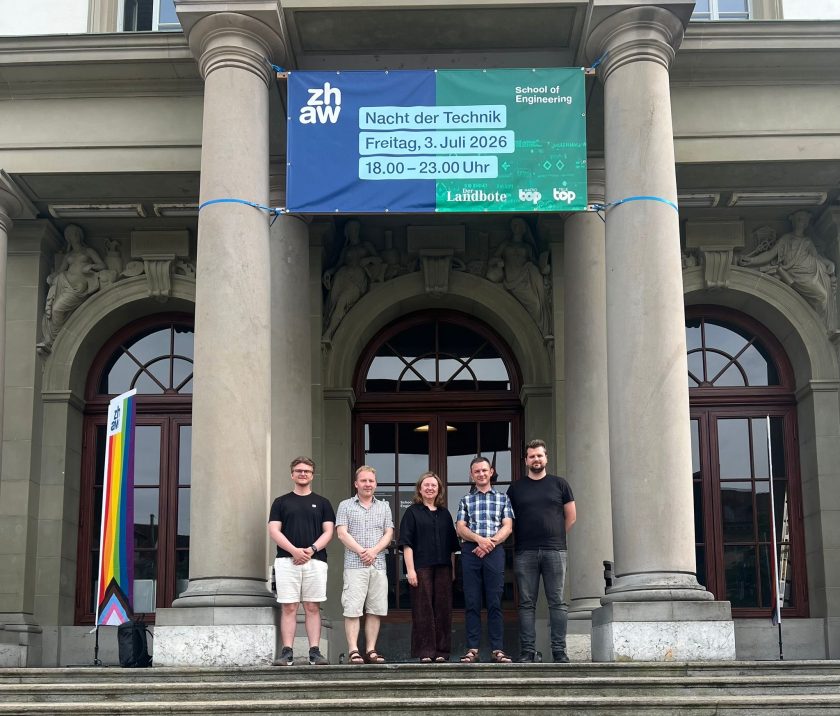
On 15–16 June, EDI researchers Anna Mutule and Aleksejs Onackis carried out a short-term visit to the Zurich University of Applied Sciences (ZHAW) in Winterthur, Switzerland, within the framework of the LACISE project. The visit continued the cooperation already established with ZHAW colleagues in the field of dynamic power system modelling and the development of simulation solutions.
The main aim of the visit was to discuss how dynamic modelling approaches can help to better understand the operation of power systems under different conditions, including situations where rapid changes occur in the system or the share of renewable energy sources increases. Such research is essential for developing safer, more flexible, and more sustainable energy systems in the future.
During the meeting, EDI and ZHAW researchers exchanged experience on the development of dynamic models, the use of simulation results, and their further improvement within the LACISE project. The short-term visit to ZHAW provided an opportunity to strengthen cooperation with Swiss partners, promote knowledge exchange, and coordinate the next steps for the further development of LACISE project research results.
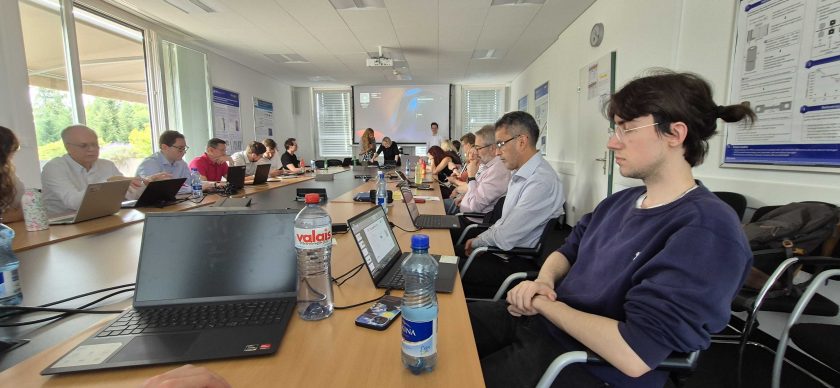
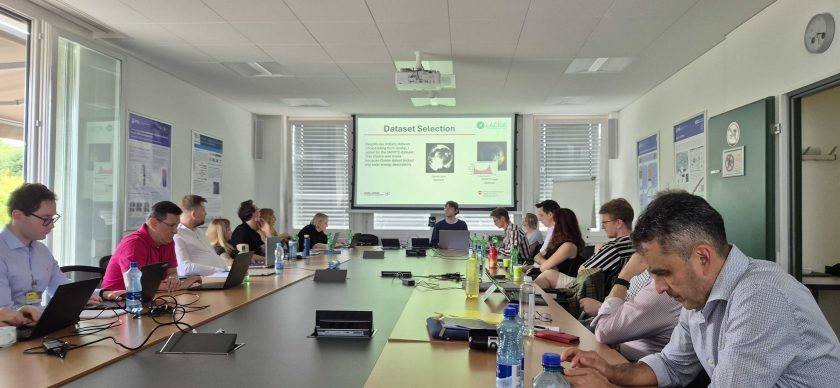
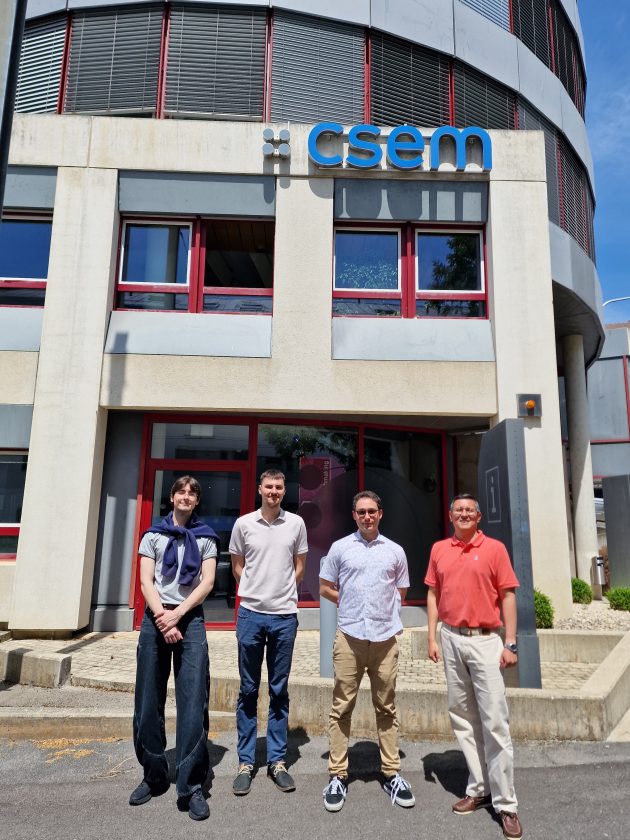
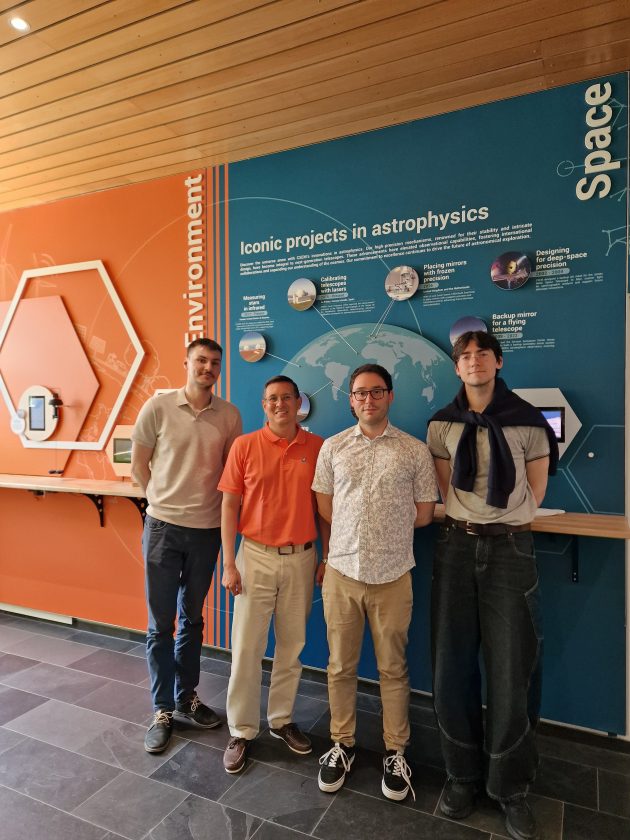
Meanwhile, on June 15–16, Normunds Andžāns and Artūrs Ņikuļins participated in a working meeting at CSEM, where the main focus was on the progress of the project’s third work package (WP3). During the discussions, the development of the “sky-looking camera” observation station, the sensors used, and their integration into the overall system were analyzed. CSEM experts also shared their experience on opportunities for optimising artificial intelligence in weather forecasting.
A significant part of the discussions was also devoted to the commercialisation possibilities of the project results, possible applications in other sectors and the building of collaboration with industry partners. During the visit, the Latvian team also familiarised themselves with CSEM’s research infrastructure and the centre’s developed technologies in the field of solar energy and sensors.
One of the main discussion topics was the developed “sky-looking camera” observation station, designed for obtaining atmospheric data. The technical specifications of the station, its integrated sensors — including the sky-viewing camera, temperature and wind sensors — as well as the possibilities of using WindCube technology were discussed. The researchers analysed the complementarity of different sensors and their potential to improve the modelling of meteorological processes. In addition, possibilities for integrating the Latvian-developed system with CSEM technologies were discussed, including solutions for wind speed determination using acoustic measurements.
During the discussions, the need to involve economics and innovation commercialisation experts in the project was emphasised, in order to assess market demand, the competitive situation and the most suitable methods for evaluating the economic value of the technology.
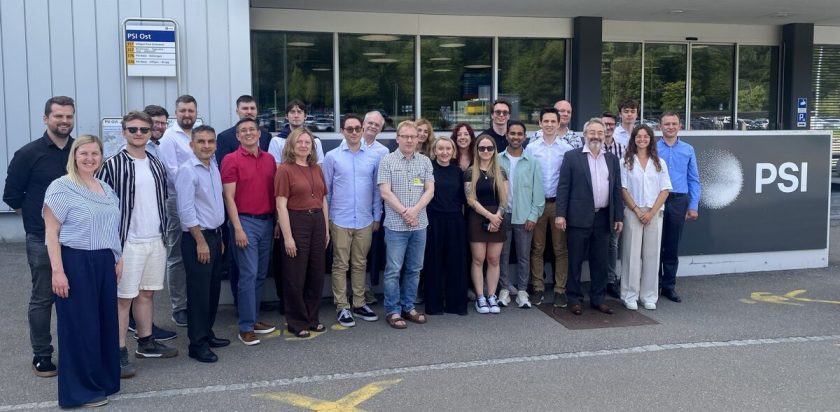
On June 17 and 18, the project partners gathered for the LACISE General Assembly, which took place at the Paul Scherrer Institute (PSI). Representatives from all consortium partners attended the meeting: the Institute of Solid State Physics at the University of Latvia, the Institute of Electronics and Computer Science, Riga Technical University, Zurich University of Applied Sciences (ZHAW), the Paul Scherrer Institute (PSI), and CSEM.
During the General Assembly, a report on the achievements during the first half-year of the project was presented. The partners presented the results achieved in all five project work packages, discussed progress to date, identified challenges and coordinated further tasks.
During the visit, the project partners and representatives of the Swiss State Secretariat for Economic Affairs (SECO) had the opportunity to visit the PSI Swiss Light Source (SLS) — one of the leading X-ray synchrotron research infrastructures in Europe. The visit provided insight into the capabilities of modern scientific infrastructure and its importance for the development of international research.
The mission confirmed the importance of international cooperation, promoting knowledge exchange between Latvian and Swiss researchers, as well as fostering the scientific development of the project and the practical application of its results in the future.
The four-day business trip once again underscored the importance of international cooperation in the implementation of the LACISE project. By combining thematic working meetings with a joint project General Assembly, the Latvian and Swiss partners strengthened their cooperation, promoted the exchange of knowledge, and coordinated the next steps for developing innovative solutions in the fields of energy and artificial intelligence.