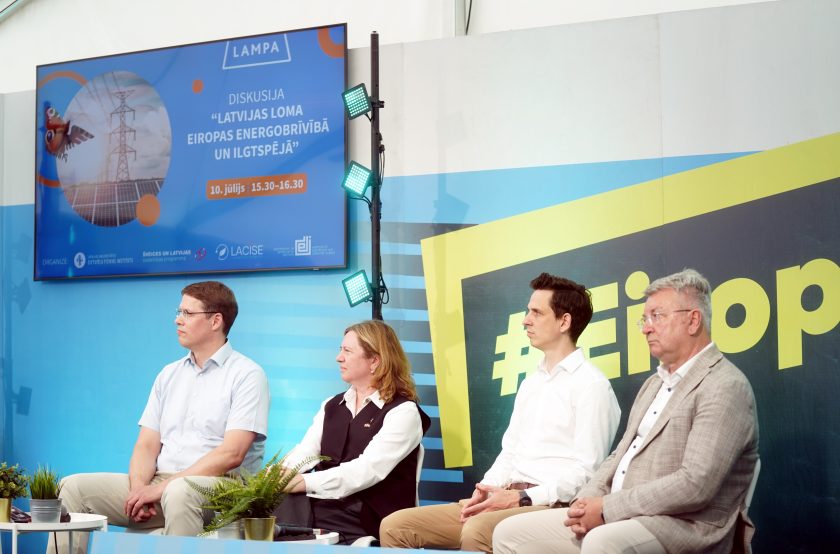
Will Latvia emerge as a leader or a follower in Europe’s energy transition? This question was at the heart of the discussion “Latvia’s Role in Europe’s Energy Independence and Sustainability”, held on 10 July at the LAMPA Conversation Festival on the European Commission Representation in Latvia stage, “Europe is Here!”. The discussion was organized by the Institute of Solid State Physics, University of Latvia (ISSP UL) and the LACISE project, in cooperation with the Institute of Electronics and Computer Science (IECS) and the Swiss–Latvian Cooperation Programme.
The discussion brought together experts from research and industry to explore how Latvia can strengthen its energy independence while using science and innovation to become an important contributor to Europe’s sustainable energy future. The speakers highlighted the growing role of digitalisation, artificial intelligence, advanced battery technologies, and hydrogen solutions in building resilient and secure energy systems.
A particularly engaging part of the discussion focused on energy resilience in everyday life. By inviting the audience to imagine a 48-hour power outage, the speakers demonstrated that energy security is not only a matter for governments and energy companies but also depends on individual preparedness, energy efficiency, and responsible consumption.
The panel brought together experts from research and industry:
- Gatis Junghāns, Member of the Management Board of the Latvian transmission system operator Augstsprieguma tīkls and Professor at Riga Technical University;
- Dr. Aigars Laizāns, Professor and Senior Researcher at the Latvia University of Life Sciences and Technologies and Chairman of the Supervisory Board of Latvenergo;
- Dr. Anna Mutule, Professor at Riga Technical University, Senior Researcher and LACISE Project Lead at the Institute of Electronics and Computer Science;
- Dr. Gints Kučinskis, Head of the Energy Materials Laboratory at ISSP UL, Leading Researcher and Coordinator of the LACISE project.
The discussion was moderated by Vita Brakovska, PhD, Head of the association ZINIS, whose dynamic approach created an engaging dialogue between the speakers and the audience.
The discussion concluded with a shared message that strengthening Latvia’s energy independence requires close cooperation between researchers, industry, policymakers, and society. With its strong scientific expertise and innovation potential, Latvia has the opportunity to become not only a consumer of energy technologies but also a creator of innovative solutions for Europe’s energy future.
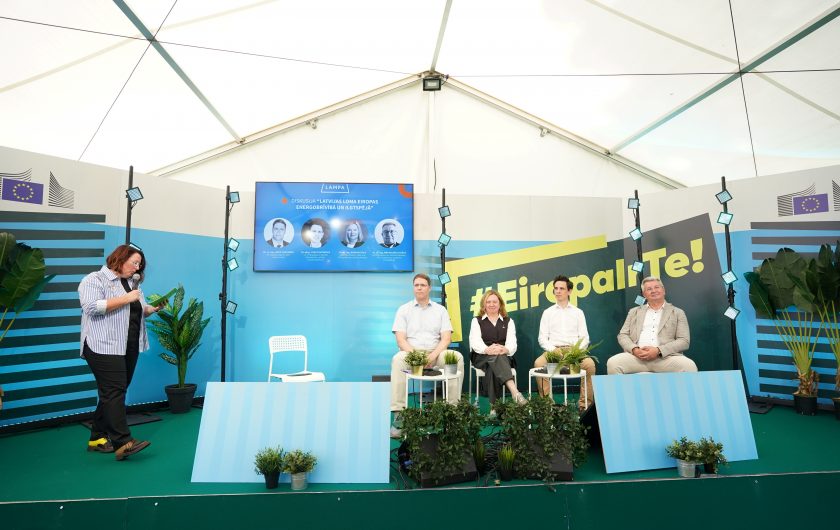
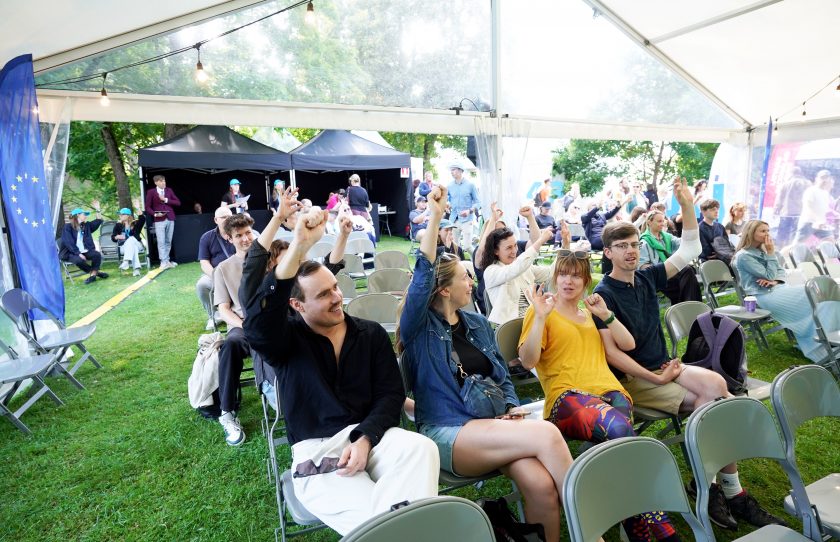
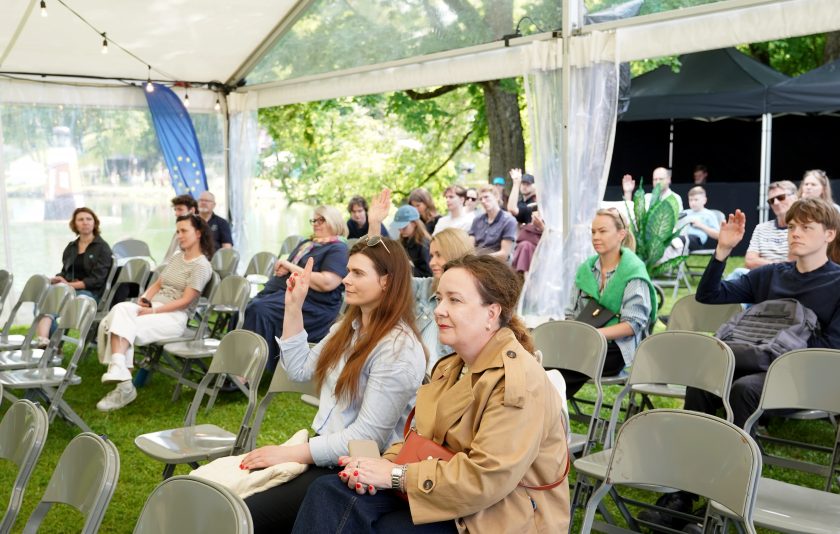
Foto:LETA