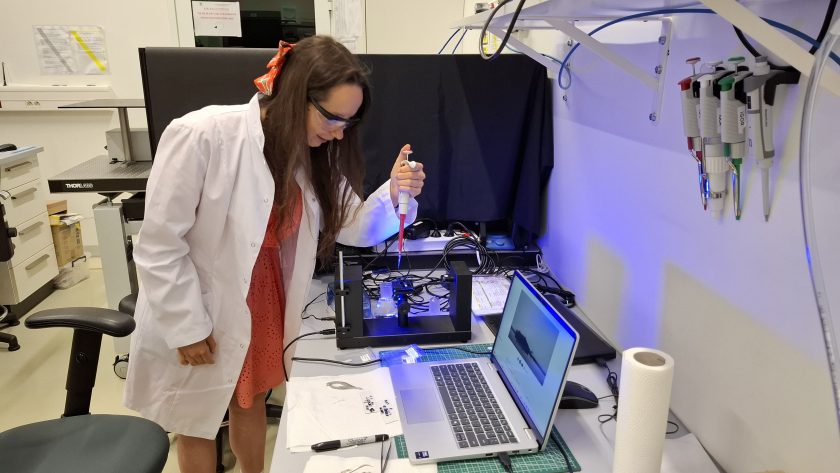
Klara Kuznecova, electronics technician at the Institute of Electronics and Computer Science (EDI), has successfully completed a month-long research secondment at the NanoBiomedical Centre of Adam Mickiewicz University in Poznań, Poland. The visit took place within the EU-funded research and innovation project ESCULAPE, supported by the Marie Skłodowska-Curie Actions programme.
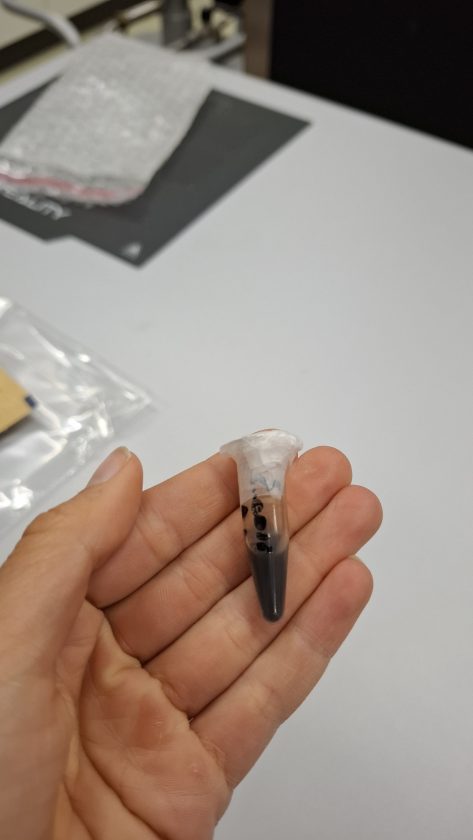
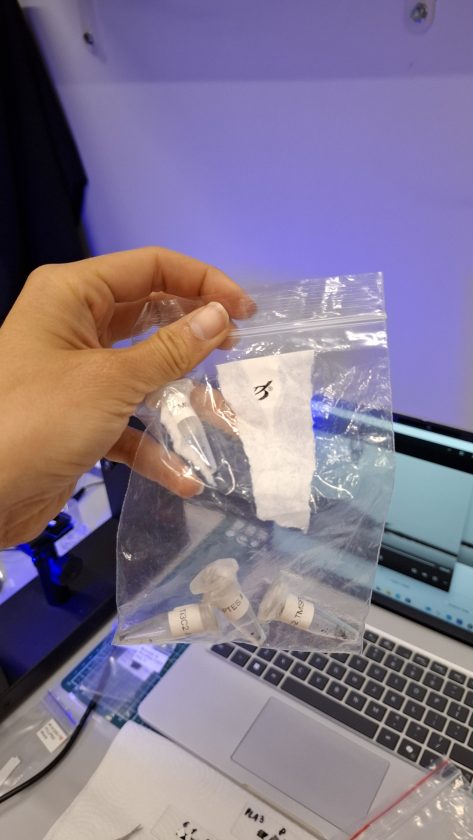
During her secondment, Klara worked with advanced Ti₃C₂Tₓ MXene nanomaterials and investigated their interaction with different polymer substrates that could be used for flexible bioelectronic devices. She took part in preparing polymer samples by electrospinning and applying MXene dispersions at several concentrations. The coatings were applied to several polymer types: PCL, PEG, PLA, cellulose, and a blended PLA/PCL/PEG sample.
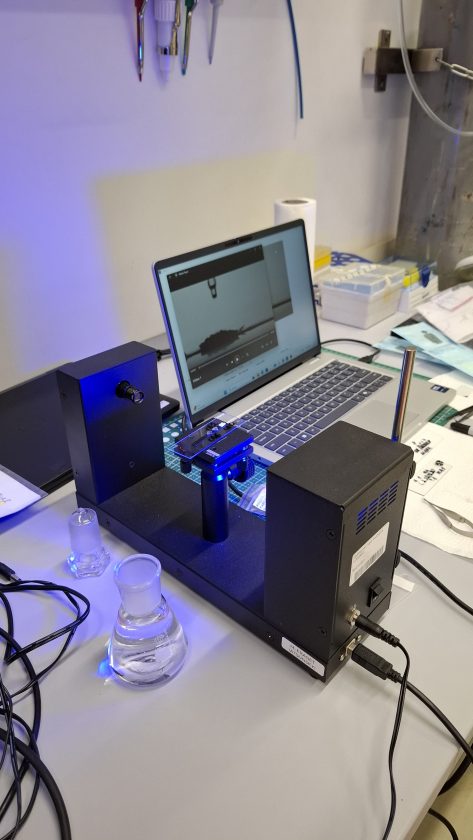
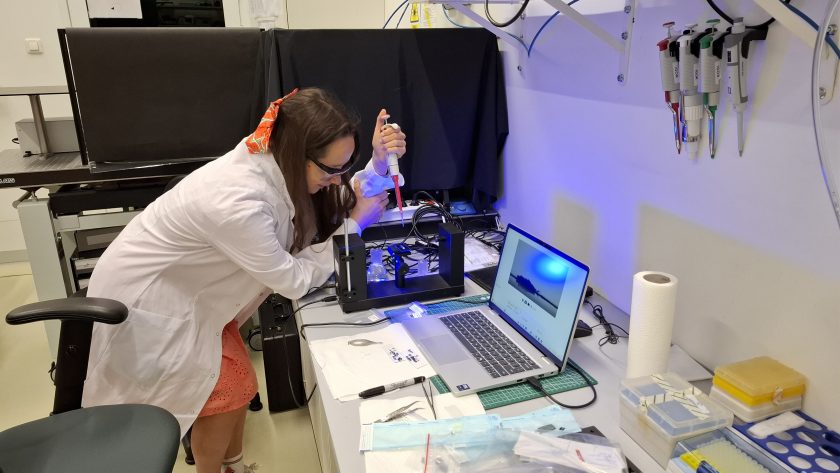
Particular attention was paid to surface wettability. Klara carried out water contact angle measurements to assess how the type of polymer and the concentration of MXene influence surface hydrophilicity or hydrophobicity. Such measurements are important for developing materials with controlled wetting properties for use in wearable electronics and biomedical applications.
Klara also assisted in scanning electron microscopy imaging of the coated samples, examining coating uniformity, surface morphology, and differences between polymer substrates. Together with the team led by Dr. Igor Iatsunskyi, she also contributed to experimental protocols that will be used in the next stages of the ESCULAPE project.
“The time I spent in Poznań gave me the chance not only to deepen my knowledge of surface science methods, but also to better understand how the choice of material and coating concentration determines its functional properties. I also got the opportunity to learn from experienced experts and was able to improve my experimenral techniques and data processing skills. This experience will be directly useful in my future work in research,” said Klara.
The ESCULAPE project aims to develop innovative strategies for electrically conductive biomaterials for tissue engineering, regenerative medicine, and wearable electronics. Cooperation between Latvian and Polish research institutions strengthens research capacity in the Baltic Sea region and Europe, and creates a basis for new joint studies.