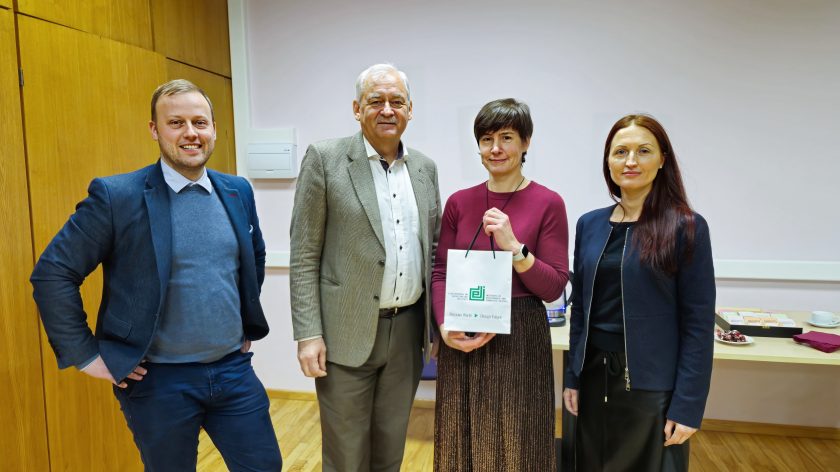
On January 15, the Institute of Electronics and Computer Science (EDI) hosted Dr. Anda Ikauniece, head of the Marine monitoring department and leading researcher at the Latvian Institute of Aquatic Ecology (LHEI), along with Dr. Inta Dimante-Deimantoviča, leading researcher of the Marine monitoring department and head of the Microplastics laboratory. During the meeting, one of the most pressing environmental challenges – marine microplastic pollution – and potential solutions for its monitoring and reduction were discussed, focusing on combining both institutions’ expertise and technological capabilities.
Microplastics have become a serious threat to marine ecosystems, affecting biodiversity and human health. To improve microplastic traceability and data collection, the development of robotic solutions was explored. These solutions would enable more accurate and efficient monitoring. EDI proposed its expertise in robotics, IoT, and machine learning, which could be applied to environmental data collection from marine environments. The importance of cybersecurity was also emphasized to ensure secure and remote data processing and transmission.
During the discussions, the idea of creating a “digital twin” of the marine environment was also raised. This concept would allow for the development of virtual models of marine ecosystems to analyze the impacts of microplastics on the environment in greater detail.
Dr. Inta Dimante-Deimantoviča highlighted the significance of addressing this issue: “Microplastics are a global problem that we cannot tackle individually. Institutions must strengthen each other to develop robust solutions to mitigate this issue.”
EDI director Modris Greitāns added: “Collaboration between institutions enables us to combine competencies from various fields to find innovative solutions to pressing ecological problems. This includes generating knowledge and technologies with long-term positive impacts on the environment. Together, we can achieve more.”
This meeting reaffirmed that collaboration between EDI and LHEI can significantly contribute to the sustainable management of marine ecosystems and the reduction of environmental pollution.