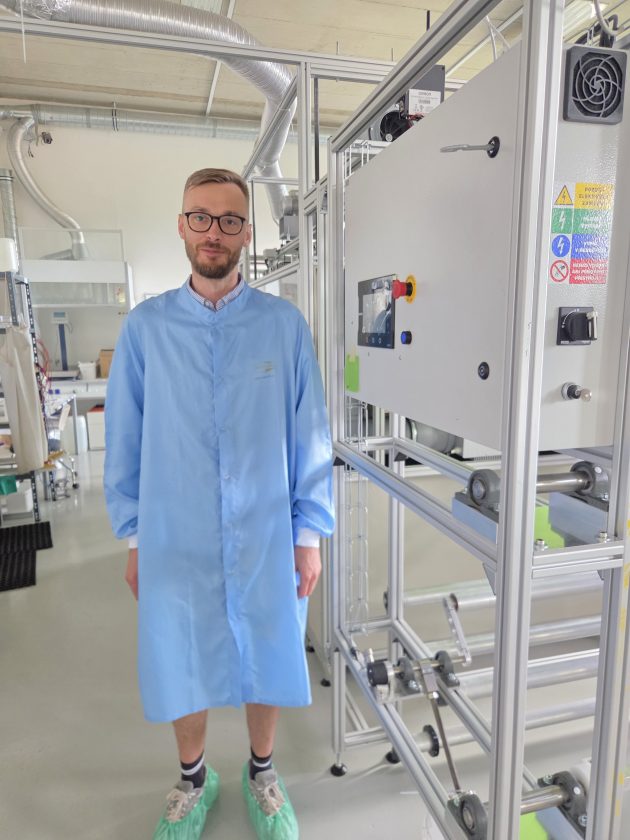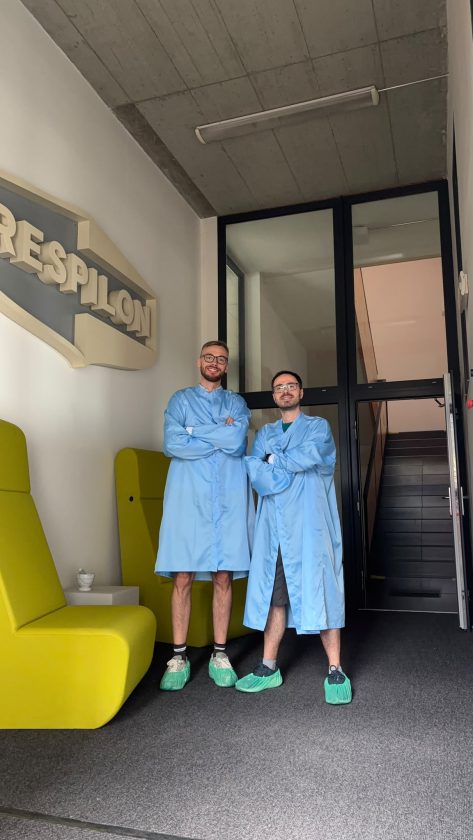
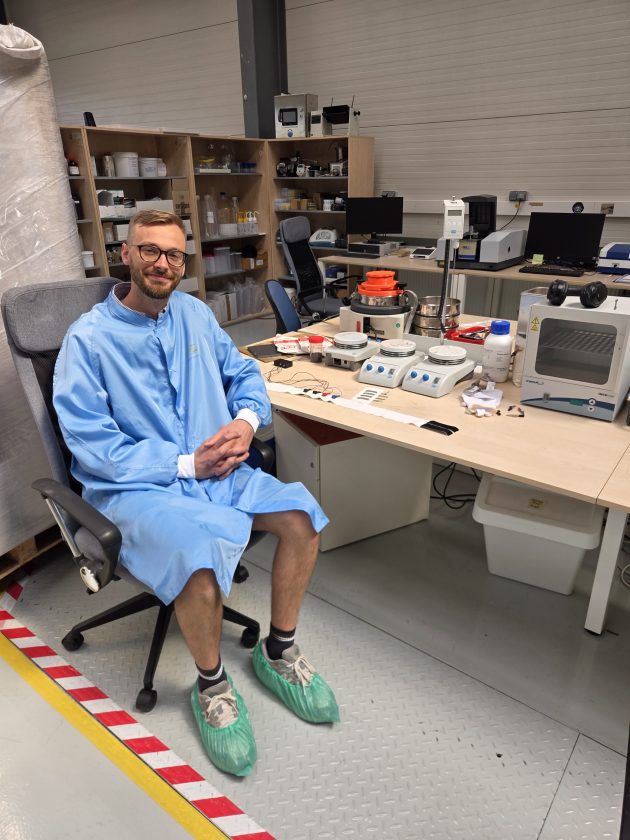
PhD Armands Ancāns from EDI’s Wearables Group has completed a four-week secondment at RESPILON (Czech Republic), from 28 June to 28 July 2026, within the framework of the Horizon Europe project ESCULAPE (Electro-conductive Polymeric 3D Scaffolds as Novel Strategies for Biomedical Applications). The visit focused on evaluating textile-based substrates for advanced bioimpedance skin electrodes.
The first week was dedicated to planning: meetings with the RESPILON team to select candidate substrates, agree on sample quantities, and coordinate the equipment needed for the work ahead. In the second week, agar/gelatine skin phantoms were fabricated and multi-frequency impedance measurements were carried out on the resulting electrode samples.
The third week included on-body testing, evaluating signal quality and motion artifacts across a range of human activities. In the final week, the collected data was analysed and a technical report was prepared, outlining conclusions on substrate suitability for further integration with innovative coatings.
The secondment also included hands-on training on specialised equipment – among them the RDC64445S laser cutting machine, used for high-precision patterning of functional fabrics – and closed with Ancāns presenting an “EDI Wearables Group Capability Profile” to the host team and project coordinators, laying the groundwork for future joint publications.
The secondment established a benchmarking methodology and baseline for advanced bioimpedance skin interfaces, together with hands-on experience in fabricating and processing textile-based electrodes. These results will support the development of next-generation electrodes for reliable, unobtrusive vital sign monitoring during daily activities, and the collaboration established with RESPILON provides a foundation for preparing joint future project proposals between the two institutions.
This secondment was carried out within the framework of the Horizon Europe MSCA-SE project ESCULAPE.