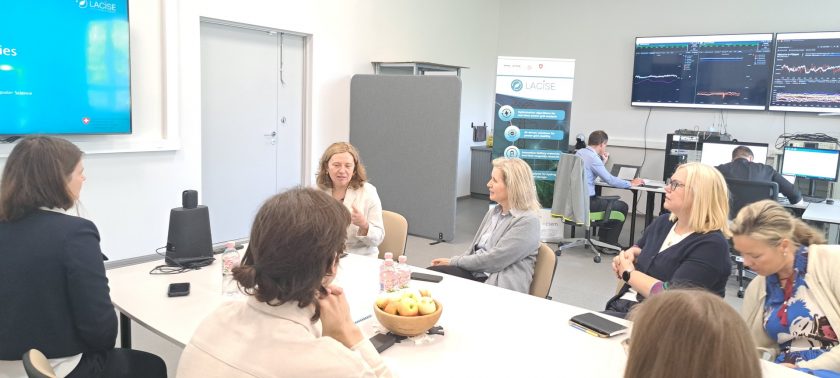
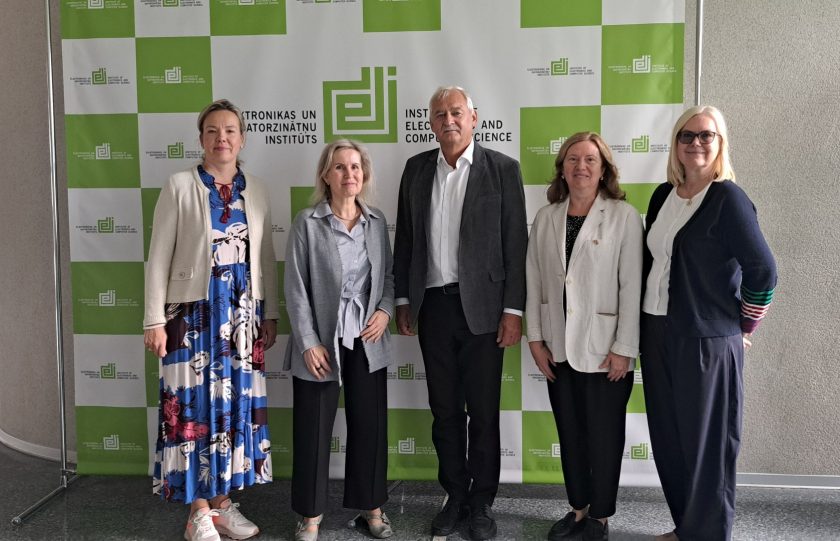
On August 31, 2026, the Institute of Electronics and Computer Science (EDI) welcomed Anja Zobrista Rentenāra, the Swiss Ambassador to Latvia; Sandra Prince and Ieva Kalniņa, program specialists from the Swiss Cooperation Office (SCO), as well as Rita Strode, a senior expert representing the Ministry of Education and Science. The purpose of the visit was to learn about the EDI’s activities, its achievements to date, current research areas, and opportunities for international cooperation.
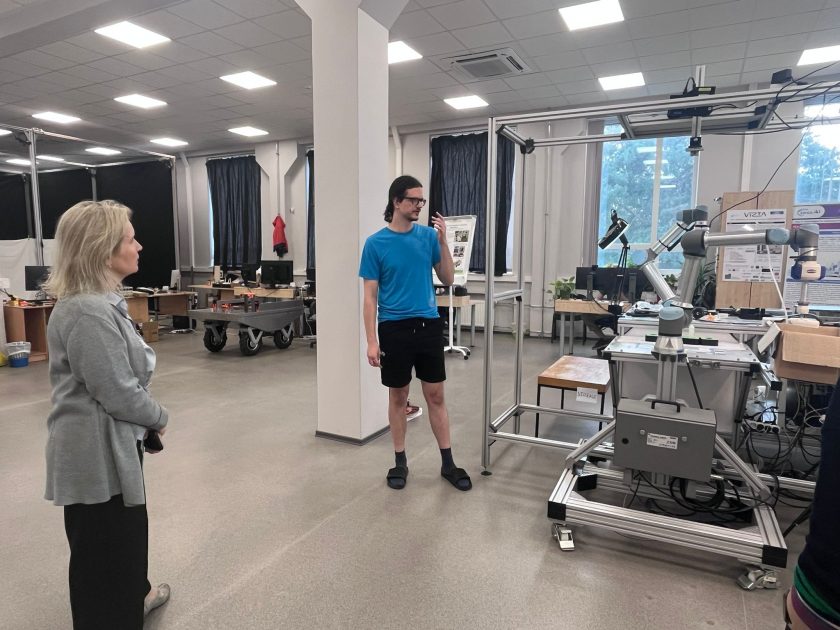
During the visit, the guests were introduced to EDI’s research infrastructure and toured the laboratories, where they met with the institute’s scientists and researchers in person, learning more about their daily work, ongoing projects, and research. The laboratory visit provided an opportunity to gain practical insight into EDI’s scientific activities and the institute’s contribution to technological development.
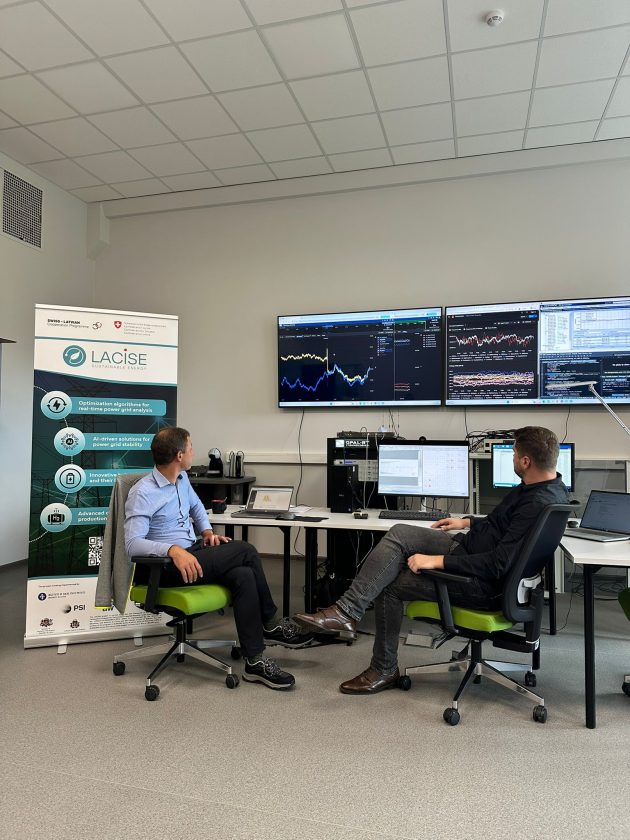
During the visit, special attention was given to the LACISE project, a Swiss-Latvian cooperation program in which international collaboration plays a key role. The guests were introduced to the project’s main goals and objectives, its progress, research areas, and the project team. During the meeting, the project’s significance in the transfer and practical implementation of new knowledge and technological solutions was also discussed.
The visit to EDI underscored the importance of international cooperation in the development of science and innovation, and provided an opportunity for representatives of foreign and Latvian institutions to gain firsthand insight into EDI’s research capabilities, the work of its scientists, and the projects being carried out by the institute.
Modris Greitāns, director of EDI, emphasizes the importance of the LACISE project: “Switzerland is an internationally recognized leader in high technology, from which we can learn a great deal. Collaboration on the LACISE project allows us to combine our expertise in smart grids and artificial intelligence with Switzerland’s experience in smart energy. This is particularly significant for our young scientists – by working together and participating in an exchange program in Switzerland, they gain firsthand exposure to world-class research practices, thereby advancing both their own research and that of Latvia as a whole. The Swiss ambassador’s visit to our institute confirms that this collaboration is mutually beneficial, as the solutions developed by our researchers and our scientific capacity make a valuable contribution to addressing shared technological challenges.”