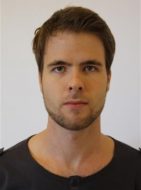
Maksis Celitāns has been working at the Institute of Electronics and Computer Science since 2019. He graduated from Riga Technical University (Riga, Latvia), where he obtained a Professional Master’s degree in Electrical Engineering in 2016, specialising in Computer Control of Electrical Technologies at the Faculty of Power and Electrical Engineering. In 2020, he earned a Master’s degree in Engineering Sciences in the study programme Intelligent Robotic Systems at the Faculty of Computer Science and Information Technology.
Maksis’ research focuses on vehicle and system perception based on data from various sensor modalities, with particular emphasis on enhancing environmental perception through shared perception and cooperative interaction among multiple systems. In his free time, Maksis enjoys spending time outdoors, is passionate about rock climbing and hiking, and is also interested in 3D modelling and 3D printing.
Recent projects
-
 Intelligent, Safe and Secure Connected Electrical Mobility Solutions: Towards European Green Deal and Seamless Mobility (EcoMobility) #ChipsJU
-
 A mosaic of essential electronic components and systems (ECS) for our automated digital future in industry and mobility (MOSAIC) #ChipsJU
-
 Ensuring European ECS Value Chain Sovereignty through Shaping the Future of ECS for Automotive Applications (ShapeFuture) #ChipsJU
Recent publications
- Edgars Lielamurs, Ibrahim Sayed, Andrejs Cvetkovs, Rihards Novickis, Anatolijs Zencovs, Maksis Celitans, Andis Bizuns, George Dimitrakopoulos, Jochen Koszescha, Kaspars Ozols. 2025. "A Distributed Time-of-Flight Sensor System for Autonomous Vehicles: Architecture, Sensor Fusion, and Spiking Neural Network Perception" Electronics, 14(7) https://www.mdpi.com/2079-9292/14/7/1375
- Katrīna Tupule, Maksis Celitāns, Kaspars Ozols, 2025. "Ground Segmentation Method Based on Polar Grid for 3D LiDAR Point Cloud", 2025 22nd International Conference on Networking, Sensing, and Control (ICNSC).