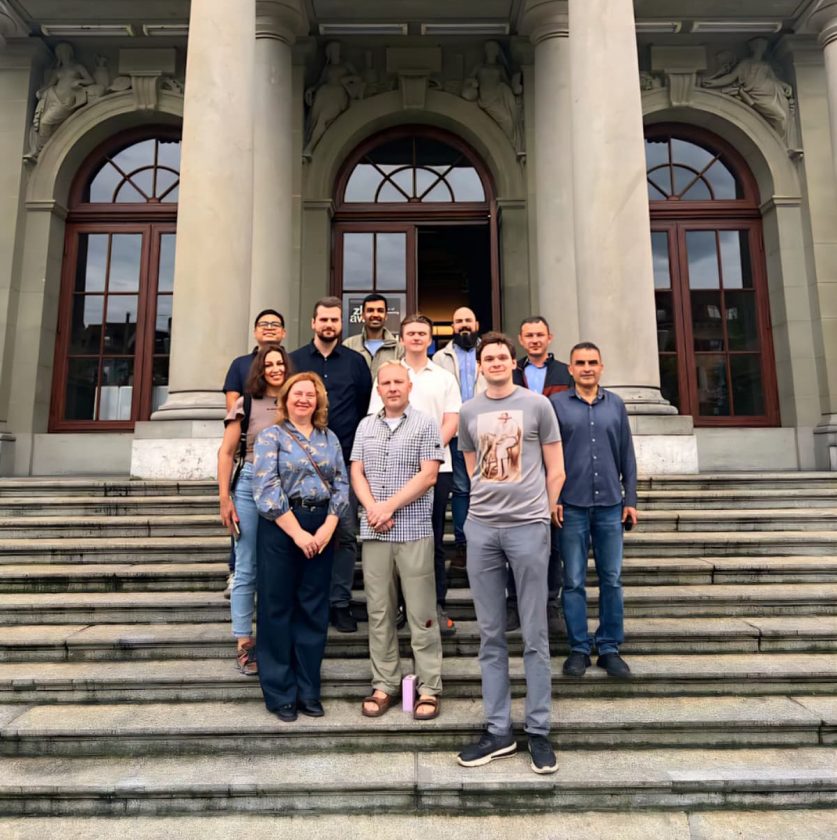
From September 3 to 6, 2025, an experience exchange visit organized by the Institute of Electronics and Computer Science (EDI) team took place in Winterthur, at the Zurich University of Applied Sciences (ZHAW), as part of the LACISE project. The aim of the visit was to strengthen cooperation with ZHAW researchers, learn about the university’s expertise in the field of energy, and participate in a practical seminar on the use of the PowerFactory modeling tool.
During the visit, the EDI team – Anna Mutule, Antons Hančevskis, Aleksejs Onackis, Roberts Lazdiņš and Laura Birzenberga – familiarized themselves with the research conducted by Institute of Energy Systems and Fluid Engineering (ZHAW) research, including in-depth analysis of frequency measurement data, energy system modeling with experimental equipment, solutions for optimizing inverter efficiency, and the application possibilities of the OPAL-RT real-time simulator.
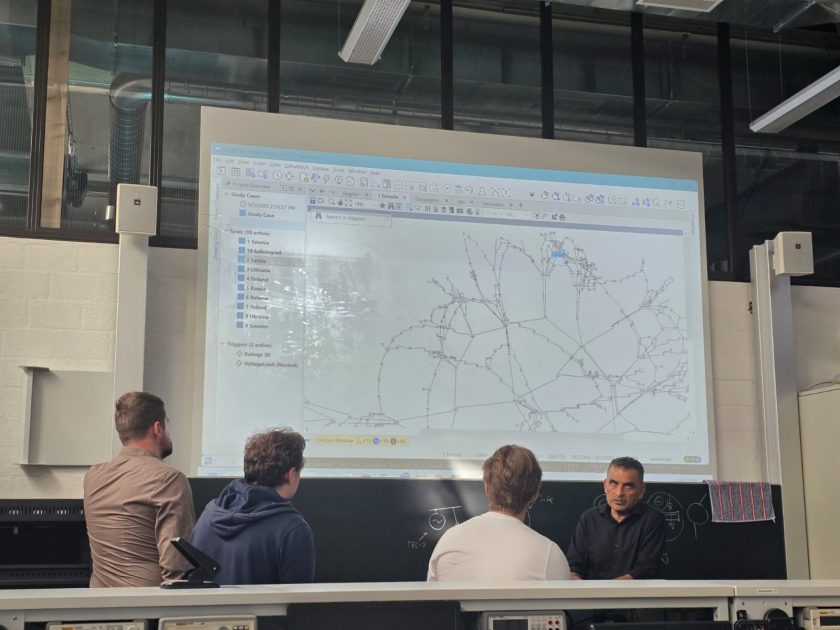
During the meeting, special attention was paid to the creation of a dynamic model of the Baltic energy system – one of the central activities of Work Package 2 (WP2) of the LACISE project.
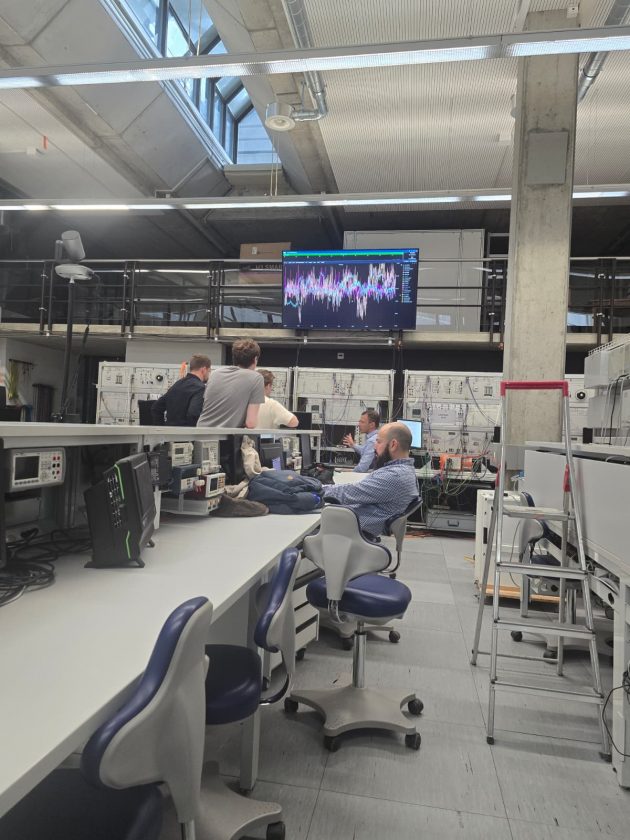
The problem faced by the Baltic and other European energy systems is the rapid increase in inverter-type generators at all voltage levels, which reduces the share of traditional power plants and affects frequency stability.
During the visit, EDI researchers participated in a practical seminar on PowerFactory, led by Dr. Miguel Ramirez Gonzalez and Dr. Artjoms Obusevs.
In joint discussions with ZHAW colleagues, the following steps were defined: data acquisition and export in the PowerFactory environment, application of modeling approaches to the Baltic energy system, and use of the model for further scientific cooperation and strengthening of international projects.