On 4 June, in the programme “The Unknown Known” on Latvian Radio 1, experts discussed the development of humanoid robots, the possibilities of artificial intelligence and future challenges. The conversation was moderated by Modris Greitāns, Director and Senior Researcher at the Institute of Electronics and Computer Science, and Professor Agris Ņikitenko, Dean of the Faculty of Computer Science, Information Technology and Energy at Riga Technical University.
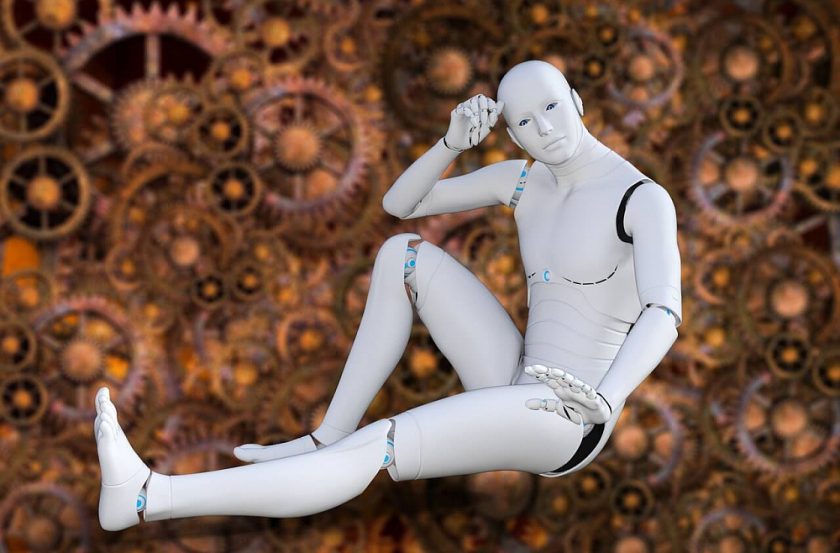
Humanoid robots – human-like machines equipped with artificial intelligence – are creating a whole new experience. Not only do they look like humans, but they are also learning to speak, understand commands and even respond to emotions. But could a conversation with such a robot be as natural as between two people?
Modris Greitāns says: “The next thing we also worked on at the institute is to give the robot a cognitive perception system, so that it looks at the world around it, sees objects and understands those objects in a human-like way. Then the conversation can be less abstract and more concrete about what we both see, how we both perceive it, how we both understand it. Then, of course, there is, let’s call it, thinking, making decisions, or drawing conclusions from what we see, where, of course, a human is superior with his brain to a robot.”
The issue of AI rights was also raised. Lawyer Karina Palkova stressed that at the moment AI has neither the consciousness nor the ability to claim rights, although such discussions have already started in Europe.
The programme concluded with a presentation of a book inspired by childhood by quantum physicist Vjašeslavs Kaščejevs, who reminded us that human imagination and curiosity are still irreplaceable.
Listen to the recording and read more about this innovation here: https://lr1.lsm.lv/lv/raksts/zinamais-nezinamaja/humanoidie-roboti