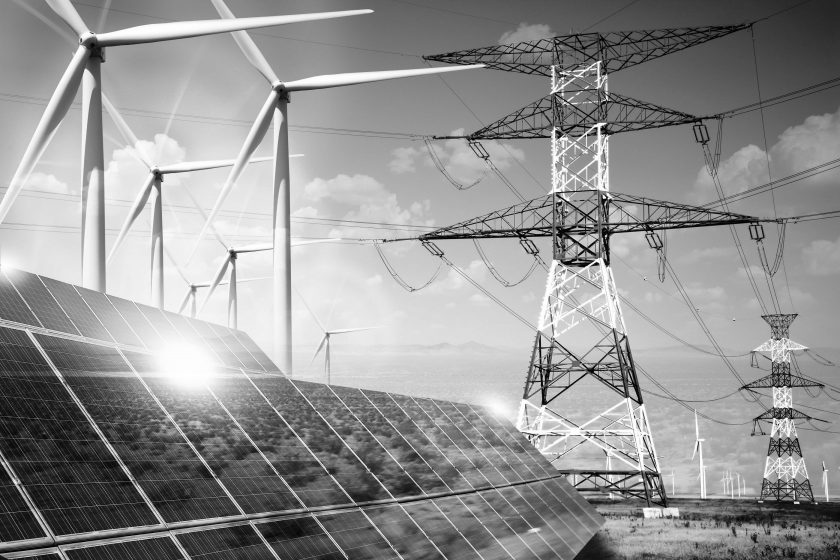
The research is highly interdisciplinary and multidisciplinary, involving the integration of various scientific disciplines, including energy and environmental engineering, electrical engineering, electronics and information technology (IT), economics, and environmental management. The issues of sustainable development of modern energy systems go far beyond engineering, taking into account economic, environmental-climatic, and social (including end-user participation) aspects. This multidisciplinary approach enables the research team at the Laboratory to comprehensively analyse and address complex energy development issues, facilitating the development of innovative technologies and the implementation of sustainable solutions to enhance the efficiency of energy systems.
The ERC aims to become a major player in shaping the future of the smart energy system – a player whose research results and developed solutions are not only valued in the field of energy research, but also contribute to the development of the Latvian economy, the well-being of the Latvian population, climate change mitigation and environmental quality improvement.
Today, the ERC provides research-based information, expertise, and support to policymakers and decision-makers in the public sector, contributing to the development of Latvia’s energy, environment, and climate policies and strategies. The ERC also cooperates with industry partners to demonstrate and test the effectiveness of solutions.
Keywords:
- Sustainable energy systems, renewable energy sources, energy efficiency;
- Smart grids, grid resilience and security, decentralised generation;
- System analysis, modelling;
- Information and communication technologies, artificial intelligence;
- End-user involvement, energy communities;
The Laboratory conducts research in three interrelated research areas:
- Complex analysis of sustainable energy system development and integrated modelling tools to address topical energy, environment, and climate issues;
- Innovative solutions integrating modern information and communication technologies in the sustainable smart development of the energy sector;
- Research on the rational and efficient use of energy resources.
Complex modelling and analysis of sustainable energy system development. The research focuses on modelling and integrated analysis of long-term (2050+) energy-environment/climate system development scenarios, and the design of development strategies and policies as a complex interdisciplinary task, taking into account dynamically evolving energy production and consumption technologies, environmental quality and climate policy requirements and objectives, and the challenges of ensuring security of energy supply. Research analyses options for the deployment of renewable energy resources (RES), including alternative fuels in the transport sector, and the broad integration of energy efficiency measures for the sustainable development of the energy system; models long-term projections of greenhouse gas and air pollutant emissions; assesses the economic and social impacts of energy-climate policy implementation. Research extensively utilises IT and mathematical modelling, developing research tools – modelling platforms with excellent performance. Research on modelling complex energy systems started in 1994. Today, the TIMES modelling platform is used as the primary modelling tool. In addition, other decision support tools are being developed and used, such as a mathematical model for assessing climate change mitigation measures and analysing impacts at the regional level, the COPERT 5 model for calculating road transport emissions, and methodologies and tools for evaluating the multiple impacts of energy efficiency improvements. The high level of performance of the models and compliance with the requirements set by international organisations ensure that the results of the studies are widely used in the development of strategic development documents on energy, climate and environment in Latvia and provide a holistic understanding of the implementation of energy and climate policies. A separate research area is devoted to the challenges of public engagement and building support for energy sector transformation.
Developing innovative solutions that combine information and communication technology (ICT) solutions with energy sector development. The research area develops innovative solutions that contribute to the modernisation and development of the energy sector by improving the efficiency of energy production, distribution, and consumption, the resilience and security of networks, and the active involvement of decentralised generation and end-users. Research results develop the scientific, technical and economic foundations for smart grid infrastructure, focusing on RES integration, energy storage technologies, demand response mechanisms and improved network management. ICT solutions and artificial intelligence are used in load forecasting, grid stability improvement and energy management algorithms. Particular attention is paid to self-generation by consumers, the development of energy communities and active adaptation of energy consumption in response to grid load and market mechanism (price) signals.
Research on the rational and efficient use of energy resources. Research activities focus on the development of innovative technologies and the efficient use of energy resources, with a particular emphasis on the development of RES. Research encompasses a wide range of energy issues, including wind resource assessment and forecasting, magnetic field modelling and electrical machine optimisation strategies, ensuring synergy between fundamental and applied science. The exploration and assessment of wind energy potential uses long-term measurements with meteorological masts and remote sensors, such as WindCube LiDAR, which provide high-precision measurements of wind speed and direction at different altitudes, thus providing reliable and verifiable data on wind resources under various climatic and topographic conditions, which are essential for the planning and development of energy systems. Future research developments focus on the application of machine learning algorithms and data analytics to improve the accuracy of wind resource assessment, wind speed prediction and optimise the siting of wind turbines within wind farms.
Support for the development of national policies
- Development and modelling of energy scenarios for Latvia’s National Energy and Climate Plan 2021–2030 and its updated version;
- Contribution to the reporting of GHG emission reduction measures and the long-term and medium-term forecasting of emissions in accordance with the European Union’s Climate Change Monitoring Mechanism (Regulation (EU) 2018/1999);
- Contribution to the annual GHG inventory reports and Biennial Reports under the UN Framework Convention on Climate Change;
- Contribution to the annual inventory reports and emission projections of the Gothenburg Protocol on Long-Range Transboundary Air Pollution of the UN Economic Commission for Europe under Directive (EU) 2016/2284.
#Energy #SustainableDevelopment #RenewableEnergy #WindResourceAssessment #EnergyModelling #MachineLearning #DataAnalytics #WindCubeLiDAR #CapacityProjections #EnergyEconomics #EnergyEfficiency #WindTurbines #MagneticFields #ElectricMachines #ComputationalModelling
Recent projects
 “Applied Research” Component 2 in the areas of ICT and Smart Energy – LACISE
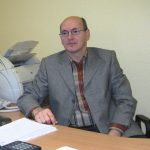
 Head of laboratory
Laboratory staff