
Robotics and Machine Perception laboratory
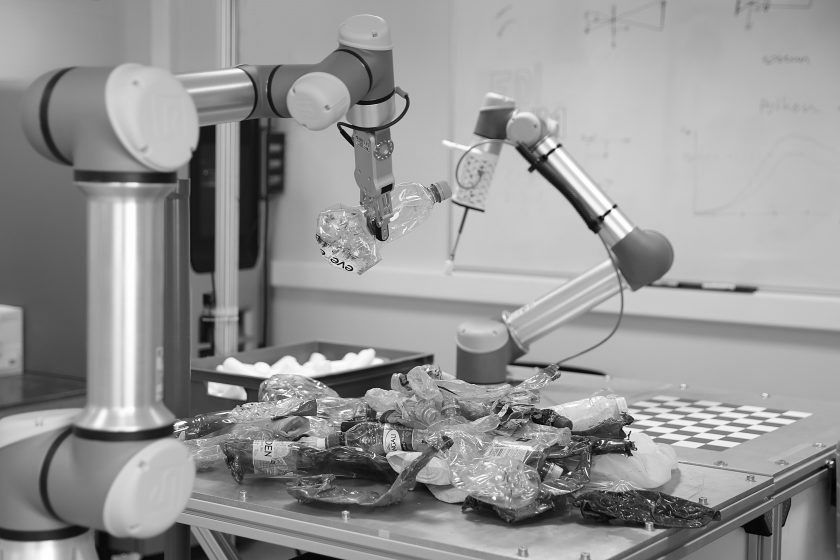
The RuM laboratory develops technologies that enable computerized systems to perceive the world, interpret it, make decisions, and act. We believe that robotics, artificial perception, and artificial intelligence will play an increasingly important role in human development, both in everyday life, industry and economy, as well as politics. EDI RuM's goal is to become a significant player in shaping this future. A player whose research results and developed technologies are not only valued in their scientific field but also promote human welfare, safety, and health. So far, we have developed and adapted our laboratory technologies for various applications in the fields of medicine, industry, agriculture, and mobility.
Keywords:
- machine learning, deep neural networks, synthetic training data
- artificial intelligence - explainable, generative, physics-informed
- automation, industrial robots, real-time control, mobile robots
- embedded intelligence and computer vision
- program synthesis
The laboratory consists of four research groups - three of which focus on different aspects of artificial intelligence and one specializes in robotics research.
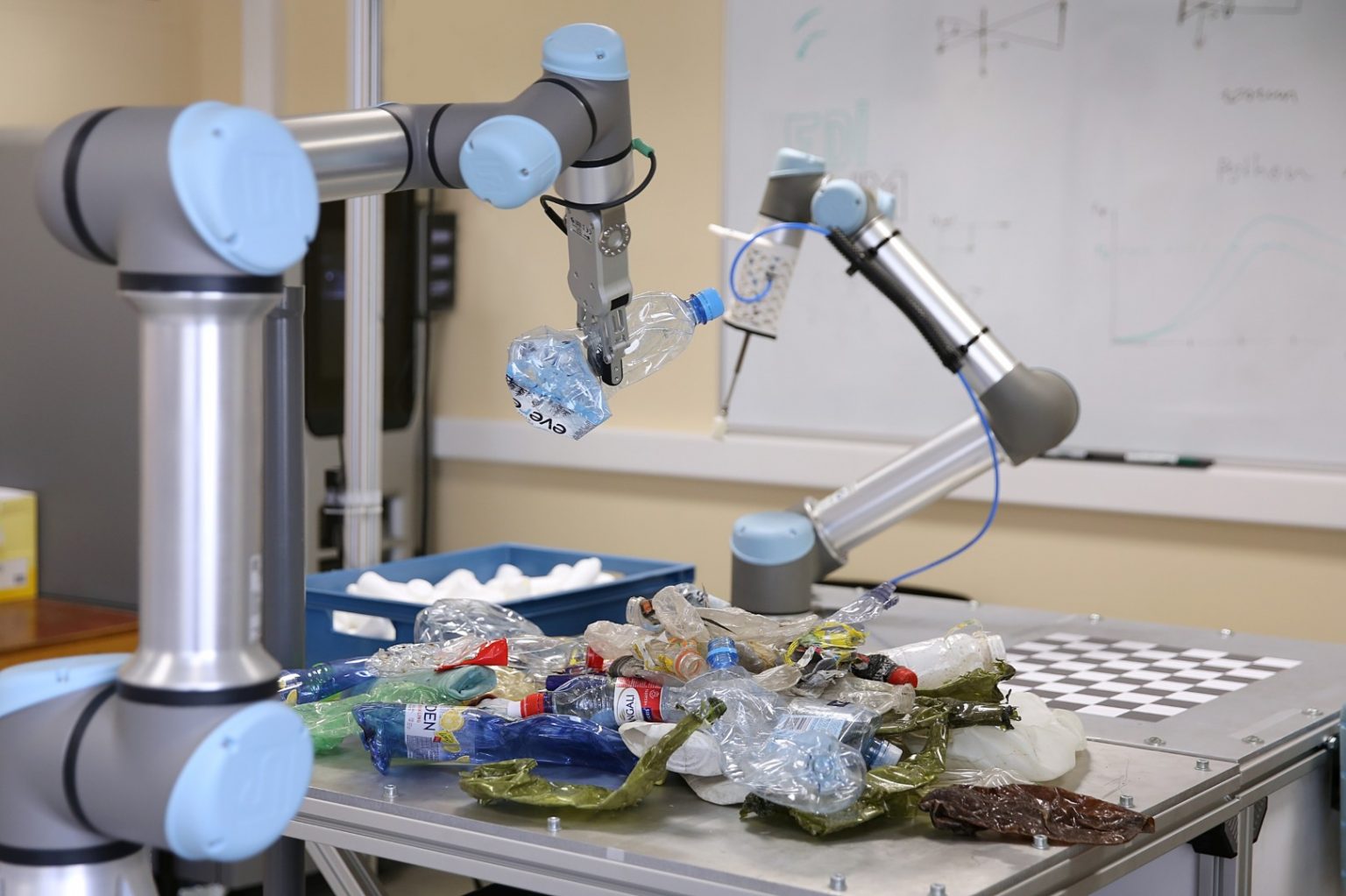
The robotics group led by Ph.D. Jānis Ārents has long-term goals aimed at enabling robots to operate effectively in complex, unstructured environments and interact seamlessly with humans. To achieve this, our work is focused on developing fundamental autonomous mobile navigation capabilities in unstructured environments, as seen in projects like VIZTA, EdgeAI, and MOTE, which explore the use of computer vision and other sensor modalities for perception and semantic scene interpretation. The main goal is to equip robots with the ability to perform general-purpose manipulation and interaction, as illustrated by our work in industrial manipulation within TRINITY and IMOCO4.E, as well as our efforts to facilitate robot-human interaction through projects like AI4DI. This involves not only enhanced perception but also the development of high-level reasoning and task execution, where projects like EdgeAI focus on parsing natural language instructions and grounding them in environmental context using compact, interpretable AI models. Furthermore, we are committed to integrating advanced perception and sensors, including unconventional modalities, with projects like MOTE and EdgeAI adapting open-ended semantic perception to real-world conditions and real-time constraints, allowing for rapid integration of new observations and task-specific information extraction, such as traversable ground segmentation. Our work in recent years, including the development of semantic scene interpretation (MOTE), natural language grounding (EdgeAI), and human interaction (AI4DI), has directly contributed to these goals, enabling robots to understand and operate in open, dynamic environments. We have also focused on developing perception systems that can operate effectively under real-world conditions and real-time constraints, as demonstrated in MOTE and EdgeAI, and creating planning systems that can understand natural language instructions and ground them in the environment using efficient AI models, which is a key aspect of EdgeAI. With these ongoing efforts, we are shaping a future where robots can operate autonomously and collaboratively across a wide range of complex real-world scenarios.
Dr. sc. comp. Kaspars Sudars' group aims to develop better artificial intelligence that leads to scientific excellence, as well as develop AI-based technology that leads to commercialization opportunities. The main theme of the group is explainable artificial intelligence and its methods. In this direction, the group researches fundamental AI models for intelligent system development and uses explainable artificial intelligence to identify relevant data features responsible for AI decision-making. Explainable AI is particularly important in healthcare applications, for which the group has conducted national grant projects OSTAK and LU-AIDA. The group also trains deep neural network models in various industry applications with a high technology readiness level (TRL).
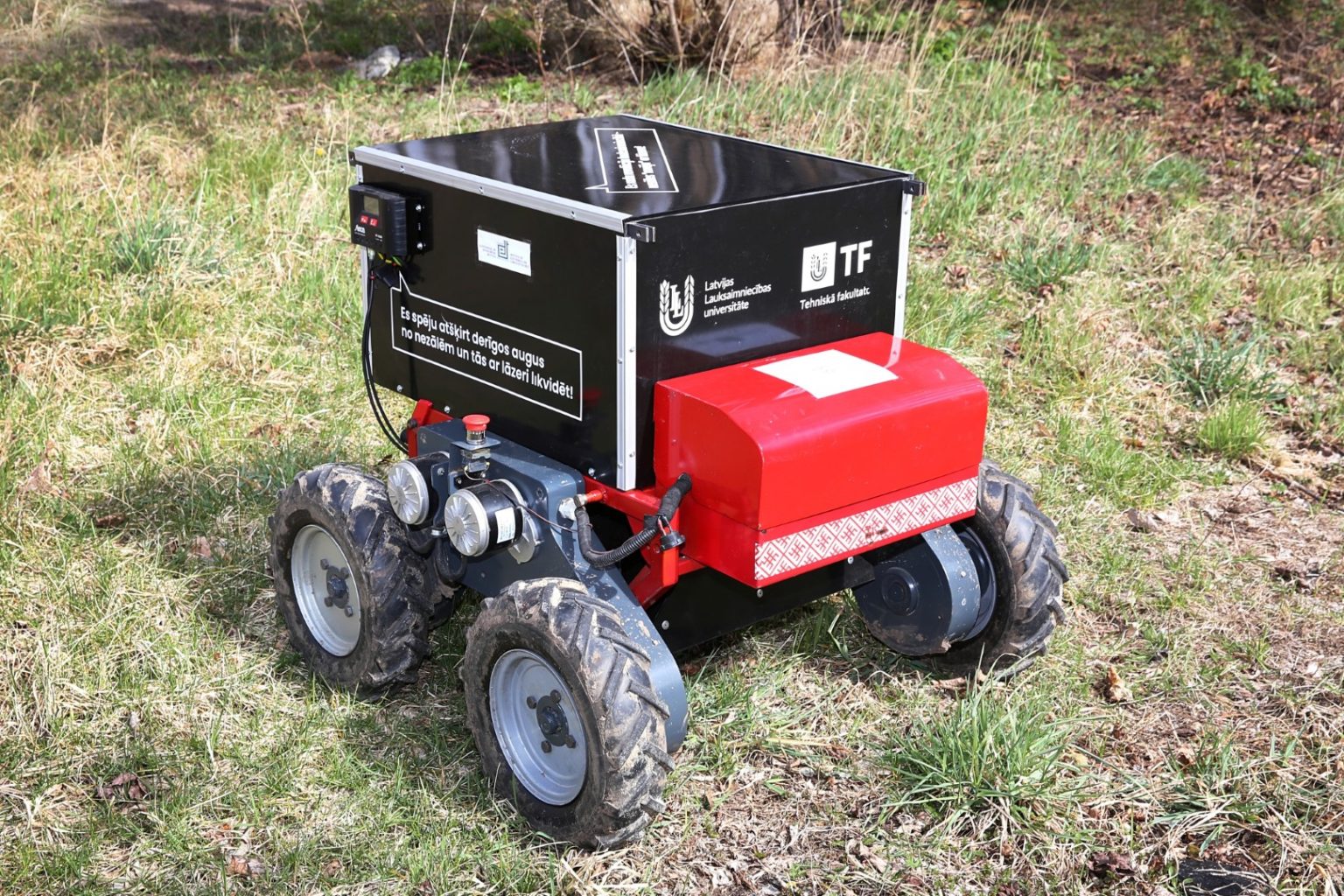
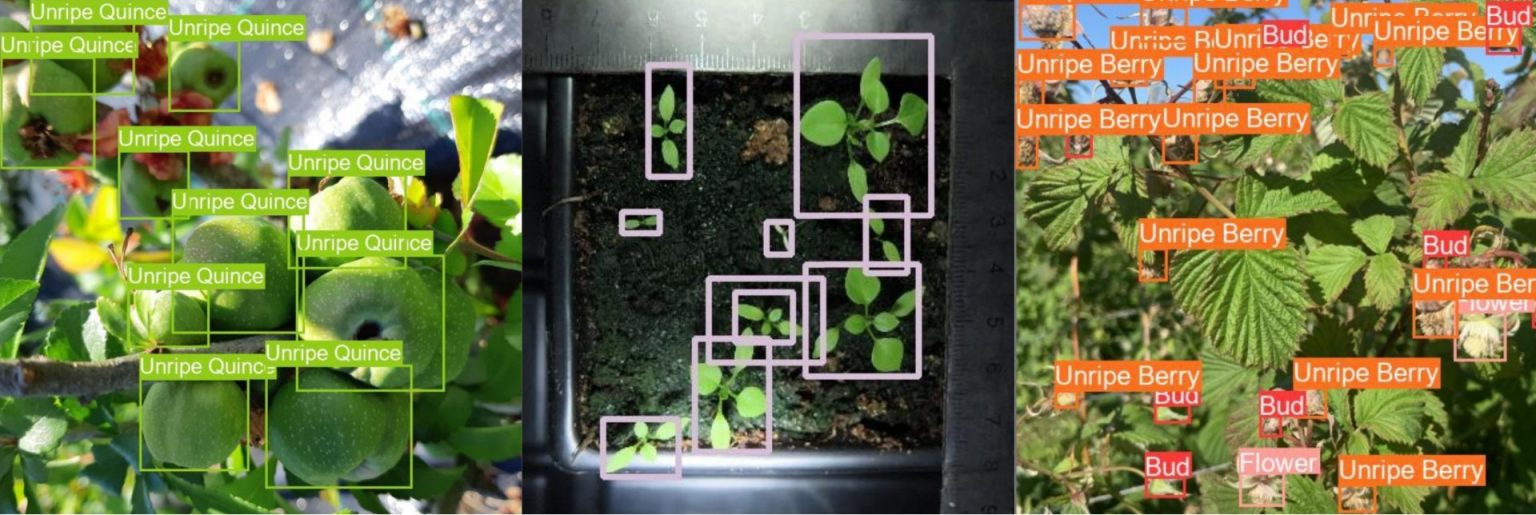
The general scientific direction of the group led by Dr. sc. comp. Kārlis Freivalds is machine learning and artificial intelligence. An additional direction is the creation and application of various mathematical algorithms and the creation of innovative devices based on mathematical algorithms. The most important application currently is in robotics, for example within the international project AIMS5.0. Additionally, the group works with fundamental artificial intelligence topics - physics-informed AI and program synthesis.
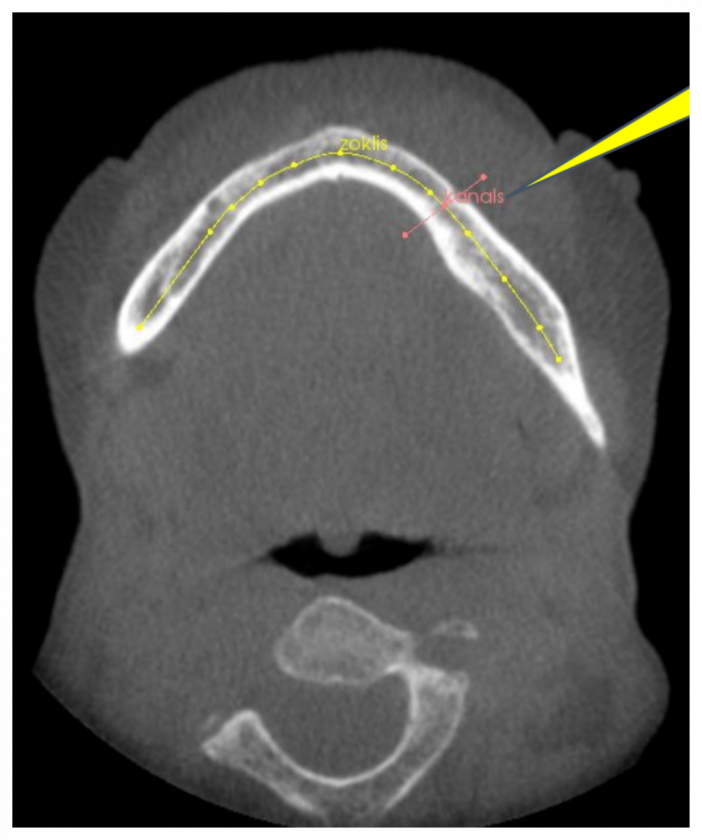
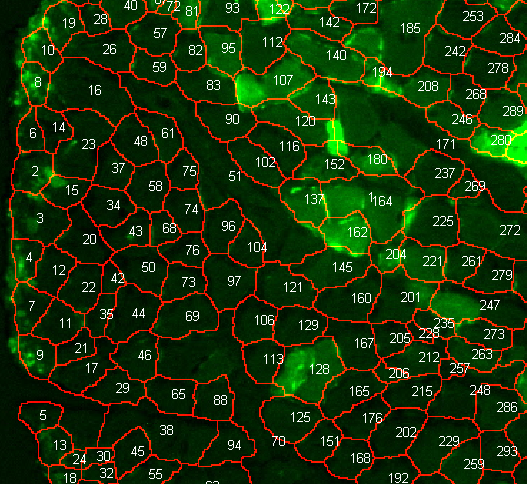
The laboratory head Dr. sc. ing. Roberts Kadiķis' group works on solving computer vision tasks (object detection, image classification, and segmentation) using both machine learning methods and classical image processing approaches. A significant research area is generative AI (generative adversarial networks, diffusion models), which we use for generating synthetic training data. For example, within the ERDF project AimOOC, generative AI was used to synthesize images of organs cultivated on chips, which were then used to train image classifiers for automating the cultivation process. The group actively seeks new applications for generative AI, resulting in solutions such as virtual medical image staining (LZP project HAVeT-AI) and making 3D modelled synhtetic data look more like real images. Models whose perception capabilities have been enhanced with various data synthesis and data augmentation methods are further applied in mobile systems (projects COMP4DRONES, Augmented CCAM), industrial robot systems (VIZTA IMOCO4.E), and for medical image analysis.
Key personnel















Projects
3 results
- Interpretable AI-Powered System for Identification of Bone Metastases in Computed Tomography and Magnetic Resonance Imaging (AIBM) 01.01.2025 – 31.12.2027
- Soil biological quality index (QBS) determination using machine learning (QBS) 01.01.2025 – 31.12.2027
- Holographic microscopy- and artificial intelligence-based digital pathology for the next generation of cytology in veterinary medicine (VetCyto) 01.01.2024 – 31.12.2026
Publications
- 2025
Privacy Auditing of Lithium-Ion Battery Ageing Model by Recovering Time-Series Data Using Gradient Inversion Attack in Federated Learning(opens in a new window)
Kaspars Sudars, Ivars Namatēvs, Arturs Nikulins, Kaspars Ozols
Applied Sciences (Switzerland), Vol. 15 (10), MDPI
Abstract
The exchange of gradients is a widely used method in modelling systems for machine learning (e.g., distributed training, federated learning) in privacy-sensitive domains. Unfortunately, there are still privacy risks in federated learning, as servers can reconstruct clients‘ training data through gradient inversion attacks. To protect against such attacks, we need to know when and how privacy is being undermined, largely due to the black box nature of deep neural networks. Although gradient inversion has been used to classify images and text data, its use in time-series is still largely unexplored. In this paper, we empirically evaluate the practicality of recovering lithium-ion battery time-series data from the gradients of a transformer-based model, both without and with differential privacy, in a time-series federated learning framework. It is especially significant in the case of electric vehicles (EVs). As shown in this paper, additional protection by differential privacy leads to the saturation of gradient inversion attacks, i.e., the reconstructed signal maintains a certain error level, depending on the applied privacy budget level. With this empirical evaluation, we provide insights into effective gradient perturbation directions, unfairness with respect to privacy, and privacy-preferred model initialisation. © 2025 Elsevier B.V., All rights reserved.
- 2025
Utilisation of Deep Neural Networks for Estimation of Cajal Cells in the Anal Canal Wall of Patients with Advanced Haemorrhoidal Disease Treated by LigaSure Surgery(opens in a new window)
Fišere, I.; Edelmers, E.; Svirskis, Š.; Groma, V.
Cells 2025, Vol. 14 (7), p. 550, MDPI
Abstract
Interstitial cells of Cajal (ICCs) play a key role in gastrointestinal smooth muscle contractions, but their relationship with anal canal function in advanced haemorrhoidal disease (HD) remains poorly understood. This study uses deep neural network (DNN) models to estimate ICC presence and quantity in anal canal tissues affected by HD. Haemorrhoidectomy specimens were collected from patients undergoing surgery with the LigaSure device. A YOLOv11-based machine learning model, trained on 376 immunohistochemical images, automated ICC detection using the CD117 marker, achieving a mean average precision (mAP50) of 92%, with a recall of 86% and precision of 88%. The DNN model accurately identified ICCs in whole-slide images, revealing that one-third of grade III HD patients and 60% of grade IV HD patients had a high ICC density. Preoperatively, pain was reported in 35% of grade III HD patients and 41% of grade IV patients, with a significant reduction following surgery. A significant decrease in bleeding (p < 0.0001) was also noted postoperatively. Notably, patients with postoperative bleeding, diagnosed with stage IV HD, had high ICC density in their anorectal tissues (p = 0.0041), suggesting a potential link between ICC density and HD severity. This AI-driven model, alongside clinical data, may enhance outcome prediction and provide insights into HD pathophysiology.
Indexed in Scopus / WoS · Scopus percentile: 84
- 2025
Multi-Step Object Re-Identification on Edge Devices: A Pipeline for Vehicle Re-Identification
Tomass Zutis, Peteris Racinskis, Anzelika Bureka, Janis Judvaitis, Janis Arents, and Modris Greitans
Charting the Intelligence Frontiers – Edge AI Systems Nexus, p. 233-253, River Publishers
Abstract
In modern computer vision tasks, the ability to identify and track objects across different scenes and environments has become important for numerous applications, especially in transportation. Inspired by this need, we propose a method that leverages a multi-step process focused on extracting and using object features for object re-identification. The proposed pipeline includes the following steps: detecting an object, converting its features into a vector embedding, storing this embedding in a vector database, and then querying the database to find the same or similar objects based on their feature embeddings. This approach enables us to identify the same object across different images or cameras, even in varying locations. This is essential in scenarios like Vehicle Re-Identification. For such scenario, implementing this process on edge devices is crucial. Therefore, ways to tailor the pipeline and its outputs for edge devices are outlined. The paper details the pipeline’s structure along with the experimental setup demonstrating its application, particularly in vehicle re-identification. The pipeline achieves 70-80% re-identification precision when dealing with vehicle images from our network cameras and above 70% Rank-1 accuracy when dealing with a CityFlow video track scenario.
- 2025
Adapting Classification Neural Network Architectures for Medical Image Segmentation Using Explainable AI(opens in a new window)
Arturs Nikulins, Edgars Edelmers, Kaspars Sudars, Inese Polaka
Journal of Imaging, Vol. 11 (2), p. 55, MDPI
Abstract
Segmentation neural networks are widely used in medical imaging to identify anomalies that may impact patient health. Despite their effectiveness, these networks face significant challenges, including the need for extensive annotated patient data, time-consuming manual segmentation processes and restricted data access due to privacy concerns. In contrast, classification neural networks, similar to segmentation neural networks, capture essential parameters for identifying objects during training. This paper leverages this characteristic, combined with explainable artificial intelligence (XAI) techniques, to address the challenges of segmentation. By adapting classification neural networks for segmentation tasks, the proposed approach reduces dependency on manual segmentation. To demonstrate this concept, the Medical Segmentation Decathlon ‘Brain Tumours’ dataset was utilised. A ResNet classification neural network was trained, and XAI tools were applied to generate segmentation-like outputs. Our findings reveal that GuidedBackprop is among the most efficient and effective methods, producing heatmaps that closely resemble segmentation masks by accurately highlighting the entirety of the target object.
Indexed in Scopus / WoS · Scopus percentile: 81
- 2025
Privacy Auditing in Differential Private Machine Learning: The Current Trends(opens in a new window)
Ivars Namatevs, Kaspars Sudars, Arturs Nikulins, Kaspars Ozols
Applied Sciences, Vol. 15 (2), p. 647, MDPI
Abstract
Differential privacy has recently gained prominence, especially in the context of private machine learning. While the definition of differential privacy makes it possible to provably limit the amount of information leaked by an algorithm, practical implementations of differentially private algorithms often contain subtle vulnerabilities. Therefore, there is a need for effective methods that can audit (ϵ,δ) differentially private algorithms before they are deployed in the real world. The article examines studies that recommend privacy guarantees for differential private machine learning. It covers a wide range of topics on the subject and provides comprehensive guidance for privacy auditing schemes based on privacy attacks to protect machine-learning models from privacy leakage. Our results contribute to the growing literature on differential privacy in the realm of privacy auditing and beyond and pave the way for future research in the field of privacy-preserving models.
Indexed in Scopus / WoS · Scopus percentile: 75
Patents
2015 European Patent No. EP2700054 B1
System and method for video-based vehicle detection
Inventors:K.Freivalds, R.Kadikis, M.Greitans
Description and link
View the patent on Espacenet(opens in a new window)EP2700054 (type: A1, date: 26.02.2014; type: B1, date: 22.04.2015) “System and method for video-based vehicle detection”. Inventors: K.Freivalds, R.Kadikis, M.Greitans. Applicant:
Institute of Electronics and Computer Sciences of Latvia.