
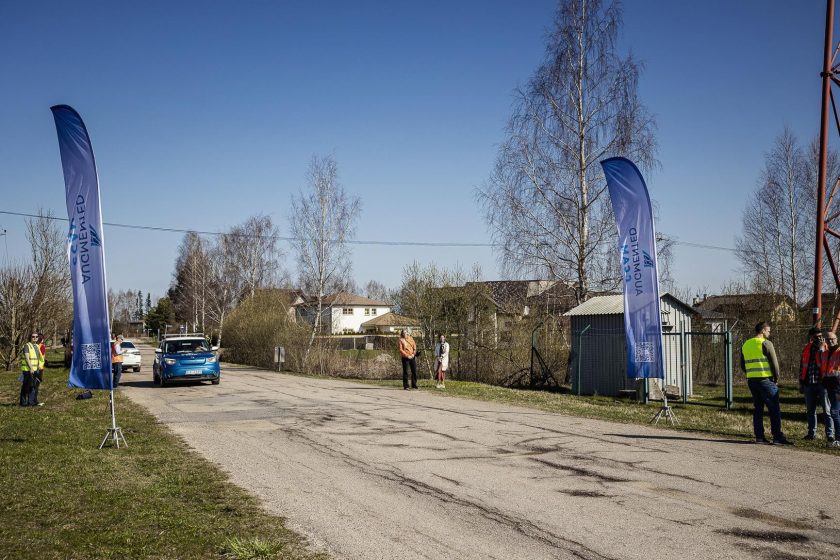
From April 14 to 16, as part of the European research project AUGMENTED CCAM, a series of large-scale pilot tests with an autonomous vehicle were conducted in Ādaži, Latvia. The autonomous vehicle developed by the Institute of Electronics and Computer Science (EDI) was tested for the first time in real road traffic conditions with multiple scenarios.
Demonstration Scenarios: Autonomous Vehicle Behavior in Real-World Environments
During testing, three key demonstration scenarios were executed to evaluate how the vehicle performs in complex and commonly encountered traffic situations not only from the perspective of the vehicle’s technical performance, but also by assessing real user interactions and responses. These scenarios were implemented with the participation of actual municipal police officers and road workers, who acted as realistic participants and later completed feedback forms to evaluate their experience.
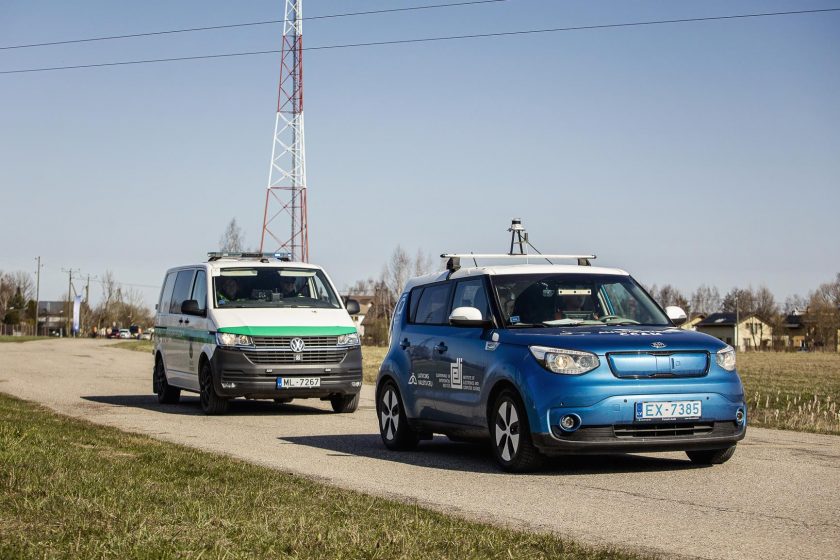
1 – Giving Way to Emergency Vehicles: The autonomous vehicle received a message indicating an approaching emergency vehicle with flashing lights. It assessed the situation and decided to slow down and move aside from the driving lane, in full compliance with traffic regulations.
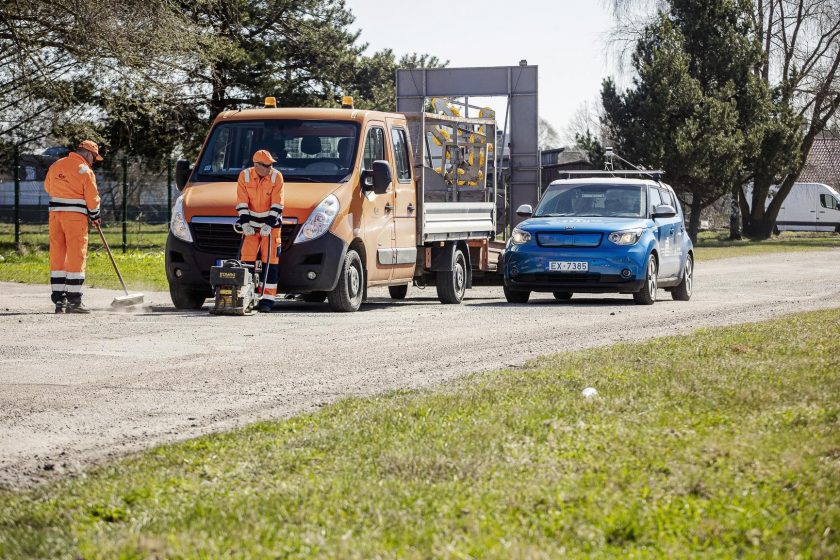
2 – Bypassing Roadworks: A simulated scenario involved a blocked road section due to temporary construction. The autonomous vehicle received updates about the roadworks and their status from the Traffic Management Center (TMC) and successfully calculated and executed a detour trajectory. Road workers on site also observed the behavior of the vehicle and later provided feedback.
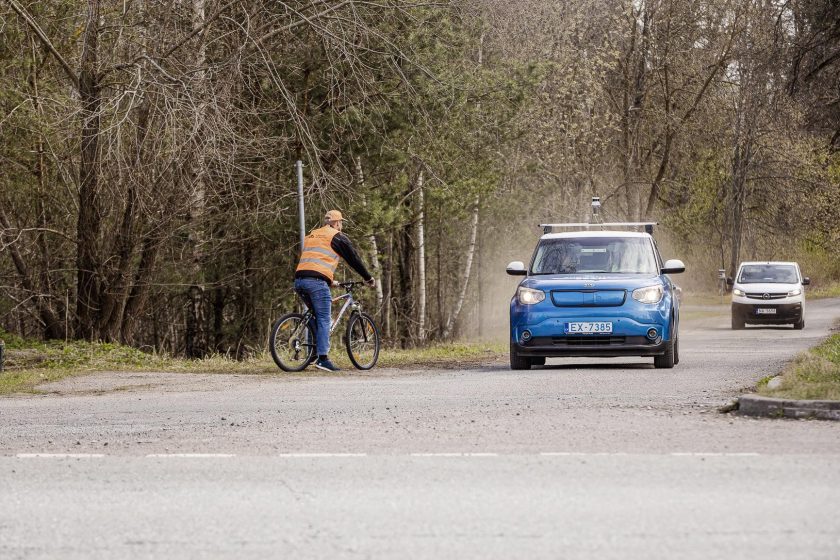
3 – Avoiding Vulnerable Road Users Outside the Vehicle’s Field of Vision: This scenario tested the vehicle’s ability to respond to information about a vulnerable road user (such as a pedestrian, cyclist, or even a pedestrian walking a pet) who suddenly appears from behind an obstacle and is not directly visible to the vehicle’s sensors. Their presence was detected by a Roadside Unit (RSU) equipped with a thermal camera, and the data was transmitted to the vehicle in real time. Upon receiving this information, the vehicle slowed down or stopped completely to ensure safety.
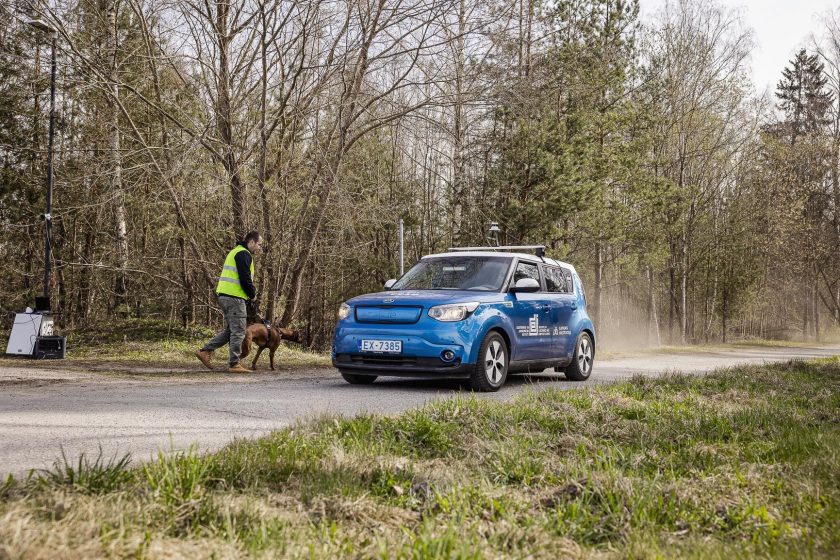
All three scenarios were carried out in a controlled yet realistic urban environment on open streets. The EDI team closely monitored the system’s responses, data processing times, and decision-making logic. These trials demonstrate that the developed technology is capable not only of perceiving its surroundings but also dynamically adapting to non-standard situations.
The tests were carried out in collaboration with Latvian State Roads and Ādaži Municipality Police, aiming to assess the EDI-developed technology’s performance and safety in real-world urban conditions specifically its responses to pedestrians, cyclists, emergency vehicles, and dynamic infrastructure changes.
Social Acceptance
Beyond technological validation, one of the key objectives of the test was to evaluate how future users such as traffic officers, road workers, and everyday citizens interact with and perceive autonomous vehicles in real traffic settings. Participants engaged with the vehicle both passively and actively, and were later asked to complete structured questionnaires to share their experience, impressions, and perceived safety. This social feedback is vital for designing human-centric autonomous mobility systems that not only function technically, but also inspire trust, clarity, and predictability in everyday road interactions.

Technology Development Within the Project
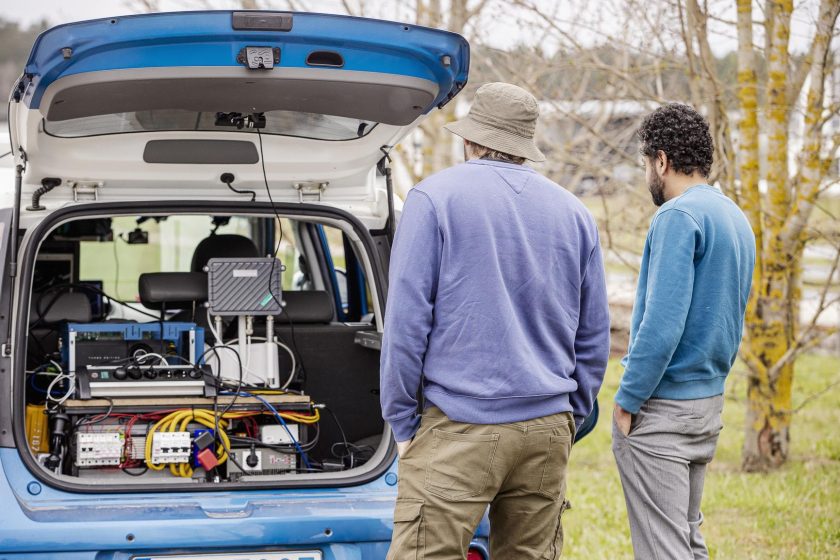
Over several years, EDI researchers have developed a comprehensive autonomous driving system capable of perceiving and interpreting the surrounding environment and making independent driving decisions.
A critical innovation within the project was the integration of external data sources. Tests evaluated how V2X (vehicle-to-everything) communication particularly RSU data regarding pedestrian presence and infrastructure changes can enhance the vehicle’s situational awareness beyond what its internal sensors can directly detect. In addition, the system was tested using crowdsourced road surface data, including information based on the internationally recognized International Roughness Index (IRI). These data enabled the vehicle to identify and react to road segments of reduced quality such as potholes or uneven surfaces by proactively adjusting speed and driving strategy to improve both safety and ride comfort.
Live Traffic Testing – A Critical Step in Research Validation
Testing in real traffic environments presents not only a technological challenge, but also a scientific one, providing essential insight into the real-world applicability of solutions developed in controlled settings. The EDI autonomous vehicle was exposed to interaction with various road users, unexpected obstacles, and variable infrastructure conditions typical of Latvian urban settings.
Live traffic testing provides invaluable data on system performance not only in terms of real-time decision-making, but also regarding how these decisions impact road safety, efficiency, and public trust in automated mobility solutions.
Learn more about the project at: