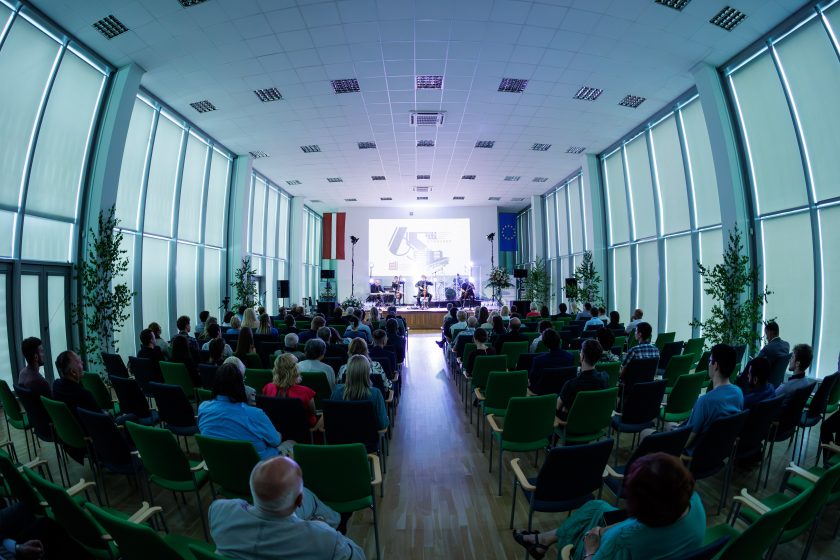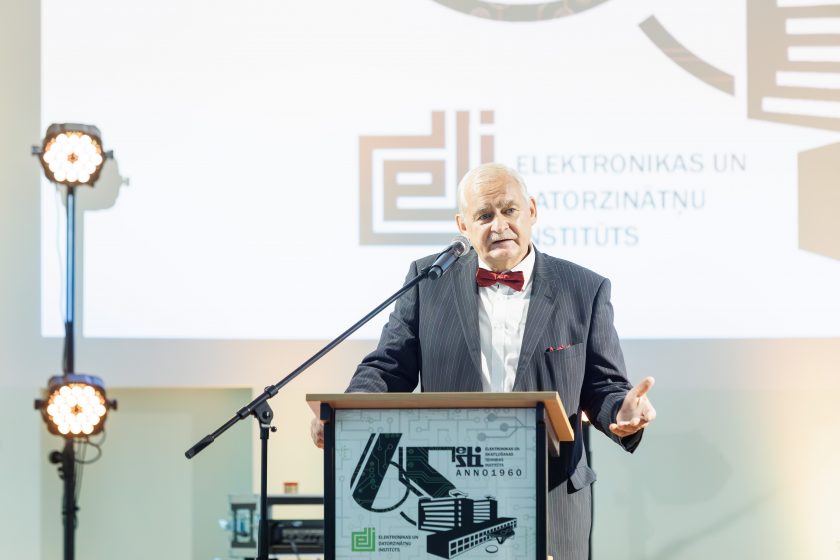
EDI was founded in 1960 within the framework of the Latvian Academy of Sciences and is currently a state research institute conducting fundamental and applied research in following Latvian Smart Specialization Strategy (RIS3) areas: “Information and Communication Technologies” and “Intelligent Materials, Technologies and Engineering Systems”, and scientific priority directions:
- Life sciences, applied mathematics, information and communication technologies for the development of the knowledge economy, intelligent materials and technologies for adding value to products and processes and strengthening cyber security;
- Public health, sport, well-being and demography;
- Knowledge culture and innovation for economic sustainability;
- Open, inclusive society and social security;
- Public security and defense challenges.
EDI is specializing in the development of Smart Embedded Cooperative systems covering the following research areas:
- Extremely precise event timing,
- Remote sensing and space data processing,
- Robotics and machine perception,
- Signal processing and embedded intelligence,
- Smart sensors and IoT.
The strategic goal of EDI is to foster the development of a knowledge-based economy in Latvia, in accordance to the science and technology development policies set by the Latvian government. This goal is achieved through the acquisition of new knowledge and developing innovative technologies, the use of which in the national economy leads to significant progress in the creation of new products with high added value, thus promoting the sustainable development of the ICT and electronic equipment manufacturing sectors and increasing the competitiveness of Latvia and the European Union in the world.
EDI strives to become a European-recognized research center in the fields of electronics, computer science, information technology and related engineering sciences, with its main research areas focused on the creation of integrated systems for signal recording, data retrieval, processing and transmission. The creation of systems involves a wide range of activities, including the development of signal recording and data retrieval methods, as well as the development of appropriate hardware and software.
In 2014 and 2021 there were carried out in Latvia the International evaluation of scientific institutions activities. EDI’s performance has been repeatedly rated as excellent or good by experts, and the Institute is the only national scientific institution in the field of engineering sciences that has been assessed in this evaluation as a high-level, strong and internationally significant institution.
Currently, EDI employs around 80 scientific staff (of whom approximately 50 hold academic positions). The total number of employees is >100.
Status
Since January 6, 2007, in accordance with amendments to the Scientific Activity Law, EDI has been a state scientific institute – a derivative public entity.
The Institute’s activities are based on the Scientific Activity Law and the regulations of the Institute of Electronics and Computer Science. The Institute’s decision-making body is the Scientific Council, which elects the Institute’s director to carry out general administrative management.
The Institute of Electronics and Computer Science is under the supervision of the Ministry of Education and Science.
Structure
Institute consists of:
- 1.1. Management
- Director – Modris Greitāns
- Deputy Director for development – Kaspars Ozols
- Deputy Director for administrative matters – Iveta Rubika
- Administrator – Liene Zaķe
- Human resources specialist – Pārsla Krūmiņa
- Information Management Specialist – Jolanta Beitāne
- Lawyer – Sintija Sīmane
- Public Relations specialist – Letīcija Laura Mote
- 1.2. Technical and maintenance section
- Main Engineer – Ģirts Budevics
- 1.3. Accounting
- Main accountant – Iluta Kalniņa
- Senior Accountant – Ziedīte Migliniece
- Senior Accountant – Iveta Lukstiņa
- Research laboratories:
+ AC&CS Editorial office;
+ Secretary of scientific activities;
+ Purchasing commission.
EDI Scientific Council: